Page 9 of 17 FirstFirst ... 7 8 9 10 11 ... LastLast
Results 201 to 225 of 415
  1. #201
    It's just a hobby
    Join Date
    Oct 2004
    Location
    London, UK
    Posts
    808

    Lightbulb Thanks, I missed that

    Quote Originally Posted by Pat D
    I think one thing missing from this discussion is the size and shape of the room. Linkwitz thinks ideally the room should be 20' X 15' X 8' or larger. As it happens, E-stat's room is larger than that: 25' x 16' x 8'

    http://cgi.audioasylum.com/systems/966.html

    In my experience, it is a lot easier to get good overall results with an electrostatic dipole in a large room. And E-stat's room is quite large. .
    Thanks Pat D, I had overlooked that, as it so happens my listening space at 13'2'' x 13'2'' x 7'7" is much smaller than that, forward radiators work much better for me in that space.
    It's a listening test, you do not need to see it to listen to it!

  2. #202
    Music Junkie E-Stat's Avatar
    Join Date
    Dec 2003
    Posts
    5,462
    Quote Originally Posted by theaudiohobby
    err no...however.both are forward radiators in mid and high frequencies, by definition they have less room interaction than dipoles at those frequencies.
    What then did you mean about boxes being dipolar?

    Quote Originally Posted by theaudiohobby
    Yes, I have and understand the difference but on the whole in the my current listening space I prefer the balance of strengths and weakness of a forward radiator.
    Why then would you need to see a polar response before commenting if you already understand the vastly different dispersion characteristics of a flat panel electrostat vs. a dome tweeter?

    Quote Originally Posted by theaudiohobby
    You may want to look more closely at the Orion design and linkwitz site, the woofers/tweeters are recessed into the baffle for good reason.
    Apparently, we are not talking about the same speakers. The tweeters are flush mounted to the baffle. That might explain your comment about their using waveguides.

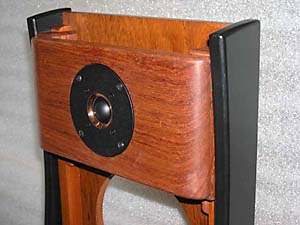
    Quarter inch recession to flush mount frame

    rw

  3. #203
    It's just a hobby
    Join Date
    Oct 2004
    Location
    London, UK
    Posts
    808
    Quote Originally Posted by E-Stat
    What then did you mean about boxes being dipolar?
    At I no point did I suggest that a box speaker was a dipole, I said they are monopoles at low frequencies and forward radiators at higher frequencies.
    Quote Originally Posted by E-Stat
    Why then would you need to see a polar response before commenting if you already understand the vastly different dispersion characteristics of a flat panel electrostat vs.a dome tweeter?
    Are they vastly different when the dome tweeter is configured as a dipole? We are discussing dipole behaviour of different speaker designs, recall my original example, the Quad 989 and the Magneplaner MG3.6/R, both are panels with different dispersion characteristics,point source dipole vs.line source dipole. IMO, the Orion is a point source dipole.

    Quote Originally Posted by E-Stat
    Apparently, we are not talking about the same speakers. The tweeters are flush mounted to the baffle. That might explain your comment about their using waveguides.

    Quarter inch recession to flush mount frame
    My mistake, that said read up Linkwitz's blog, the wide-baffle is designed to control the tweeter's radiation pattern.

    "A second Seas Millennium tweeter is mounted on a separate, flat baffle in the rear of the existing tweeter. The added baffle was necessary to preserve a wide and uniform polar response for the tweeter...The ORION with rear tweeter added has become quite symmetrical between front and rear polar responses and has reduced output to the sides. "

    Lastly, the woofers are indeed mounted in waveguides.
    Last edited by theaudiohobby; 07-29-2010 at 06:39 PM. Reason: More material
    It's a listening test, you do not need to see it to listen to it!

  4. #204
    Forum Regular
    Join Date
    Nov 2003
    Posts
    884
    Quote Originally Posted by E-Stat
    Hmmm. First you say:

    "In HT, bipolar speaker belong in the rear..."

    Yet, later you say:

    "You don't put THX dipoles in the back of the room..."

    rw
    You do understand the difference between bipolar speaker and dipoles, don't you?
    "Opposition brings concord. Out of discord comes the fairest harmony."
    ------Heraclitus of Ephesis (fl. 504-500 BC), trans. Wheelwright.

  5. #205
    Music Junkie E-Stat's Avatar
    Join Date
    Dec 2003
    Posts
    5,462
    Quote Originally Posted by theaudiohobby
    At I no point did I suggest that a box speaker was a dipole, I said they are monopoles at low frequencies and forward radiators at higher frequencies.
    Only now have you advanced the term "forward radiator". They are different from monopoles and dipoles?

    Quote Originally Posted by theaudiohobby
    Are they vastly different when the dome tweeter is configured as a dipole?
    Adding another dome tweeter to the rear has no effect on the dispersion of the one in front.

    Quote Originally Posted by theaudiohobby
    IMO, the Orion is a point source dipole.
    They are. With very different dispersion characteristics that directional panels.

    Quote Originally Posted by theaudiohobby
    Lastly, the woofers are indeed mounted in waveguides.
    Waveguides? Aren't waveguides designed to be smooth and shape the output of a driver? Siggy calls it an "H frame". Looks just like a crude box to me.

    rw

  6. #206
    Music Junkie E-Stat's Avatar
    Join Date
    Dec 2003
    Posts
    5,462
    Quote Originally Posted by Pat D
    You do understand the difference between bipolar speaker and dipoles, don't you?
    Either generates sound in multiple directions, push pull or not. In any event, they are not recommended for use in the rear of the room if you follow THX guidelines (for which I couldn't care less unless I had some Logitech speakers).

    rw

  7. #207
    It's just a hobby
    Join Date
    Oct 2004
    Location
    London, UK
    Posts
    808

    The penny finally dropped

    Quote Originally Posted by E-Stat
    Only now have you advanced the term "forward radiator". They are different from monopoles and dipoles?
    Yes and I said as much when I introduced the term 3 posts ago, but for some reason you missed it, I said this
    Quote Originally Posted by theaudiohobby
    Your elaboration missed a very pertinent point (see link), a box speaker is a monopole only at low frequencies, The deviation above only relate that region. Above that its only forward radiating. A dipole is always radiating front and rear at all frequencies
    And then this
    Quote Originally Posted by theaudiohobby
    err no...however.both are forward radiators in mid and high frequencies, by definition they have less room interaction than dipoles at those frequencies.
    Leaving that aside, do you agree that by definition a forward radiator has less room interaction than a dipole radiator?
    Quote Originally Posted by E-Stat
    Adding another dome tweeter to the rear has no effect on the dispersion of the one in front.
    Not exactly sure what you are trying say, however two dome tweeters, with absorbed back-waves, radiating along the same axis, configured such that one is forward facing and the other rearward facing, operating over the same frequencies but in anti-phase to each other would proximate to dipole radiation.
    Quote Originally Posted by E-Stat
    They are. With very different dispersion characteristics that directional panels.
    Could you explain how these differences affect the room interaction characteristics of the speakers in question.
    Quote Originally Posted by E-Stat
    Waveguides? Aren't waveguides designed to be smooth and shape the output of a driver? Siggy calls it an "H frame". Looks just like a crude box to me.
    Crude or not, it's still a waveguide and they modify the directivity of the speaker.
    It's a listening test, you do not need to see it to listen to it!

  8. #208
    M.P.S.E /AES/SMPTE member Sir Terrence the Terrible's Avatar
    Join Date
    Jul 2002
    Posts
    6,826
    Quote Originally Posted by E-Stat
    Hmmm. First you say:

    "In HT, bipolar speaker belong in the rear..."

    Yet, later you say:

    "You don't put THX dipoles in the back of the room..."

    So, which answer is it?
    On two of my receivers, the left and right surround are labeled, Left rear, and right rear, even though those speakers are to be placed to the sides of the room. The back speakers are label BRL and BRR, meaning back rear left and back rear right. It may be different on other recievers, but on most of the 5.1 (and now at least one 7.1 reciever) recievers I have owned called the surrounds rears.


    Only to those who have no understanding of dispersion. Forget dipoles for a moment. Do all monopoles, regardless of driver design radiate the same ? Obviously not!
    A monopole is called a monopole because if its mono(meaning one, or in this case one direction)polar dispersion pattern. So while one monopolar speaker may have a 120x40 degree dispersion pattern over most of its operating range, and another may have a 90x60 degree dispersion pattern, it is all foward of the cabinet until you get into the low bass of which the dispersion pattern becomes omnidirectional. So yes, they radiate the same, but in different degrees.


    Using single vs. double monopoles to prove the difference between monopoles and dipoles? That is hilarious!
    If you were paying attention to what I wrote(and it is obvious you weren't), I was speaking about the difference between two designs, and how they interacted with the room. This is what I said.

    Speakers that do not interact with the walls as much as a dipole does will preserve more of the original capture than a dipole will. Holmann Tomlinson proved this back in 1990 when I was still in college(and in his class), and that was the basis for the THX speaker certification

    One monopole speaker had a very wide dispersion pattern in the horizontal and vertical plane(strongly engaged the room at all frequencies except the highest), the other speaker had a very controlled dispersion pattern in the horizontal plance, but a very limited dispersion pattern in the vertical plane(far fewer reflections in room overall). We were asked which sounded more like the headphones, the wide dispersion speaker which had many reflection off the side walls and ceiling, or the other with just side wall reflections. The speaker with the least interaction with the surrounding surfaces won, hence why the dipole was brought into the equation. A dipole(at mid and high frequencies) engages a rooms acoustics far more than a monopole speaker would because of its strong engagement with the front wall, and the walls in front of the speaker. It becomes more multidirectional as the frequencies go up, and the monopole speaker becomes more directional as frequencies go up.


    What I know is that you ignore dispersion. Do you understand that concept? Ever heard of beaming? Ever notice that the sound of dome tweeters sounds pretty much the same even off axis? Are these observations beyond your comprehension?
    I did not ignore dispersion, it was the very basis for my comments. Can you read? You are wrong about the dome tweeter. A dome tweeter beams with increasing frequency because the wavelengths it has to reproduce becomes smaller. Also it highly depends on how far off axis we are speaking of, so a blanket statement without context is pretty much useless.


    What does any of that have to do with the alleged room interaction of monopoles vs. dipoles?
    Monopoles will preserve more of the original ambience in a recording than a dipole will. Plain and simple. That was the basis of my comparison as I outlined before.


    Choose whatever term you wish to identify the movement of a sound source within the field. Such happens frequently in movies and never in music (short of theatrical tricks). Do you understand the difference?
    I didn't choose the term, it was called panning before I was born. Panning is used in music, just not the music you listen to(see Alan Parson's Up in the Air). So once again your "never" generalization does not apply. What you call a trick is actually called an "effect". If you are going to debate something, it might help of you learn the langauge of what you are debating. We don't do tricks when mixing soundtracks or music. Do you understand the diffence?


    Exactly my point which conflicts with your statement:


    "In HT, bipolar speaker belong in the rear..."

    They do NOT belong in the rear. They belong on the sides. You remain confused about your rear.
    Rear speakers is a very common way to describe the surround speakers- the terms are interchangeable, and always have been.

    Read the opening line here

    http://www.ehow.com/how_1000395_home...-speakers.html

    Look at what its called here:

    http://www.fcitech.com/itemdetails.asp?mod=SAMSWA4000

    Go to the bottom of the page and look at what they call them

    http://www.cinemahometheaters.com/co...s_jbl_csp_1550

    Look for this line on this page.

    http://www.brighthub.com/electronics...les/50513.aspx


    the term 3-2 generally refers to three front speakers and two rear speakers.


    Read more: http://www.brighthub.com/electronics...#ixzz0vCG0eAqK[/b]

    AS you can see, the words surround and rear speakers are interchangable, and have been so HT's came to the consumer market. So my rear is not the problem, it is your ignorance of the interchangable words that is.


    Indeed, it is! Your assertion is not supported by fact. When I look at the back of my receiver, the jacks are referred to as "left and right surround". The THX website concurs with NAD's usage and the word "rear" is completely absent. Look here. You really should research your answers before responding. Does this panel look familiar?


    rw
    Well, my examples have disproved this already. I might want to brush up on your HT lingo before discussing the subject. You will have far fewer misunderstandings if you do.

    I would like to address this comment of yours as well.

    And more lifelike musical reproduction to these ears. Take your choices (and be honest about them)!

    Let's be clear here. There is nothing more musical about a speaker who's radiation patterns works exactly the opposite of how acoustical instruments truly radiate.

    Dipolar speakers are more directional in the low frequencies(by their design) and increasingly become multidirectional at higher frequencies. This is the exactly opposite of how acoustical instruments radiate in to the air. String instruments (and quite a few other instruments) are omnidirectional at lower frequencies(within their operating range), and become increasing directional as frequencies go up - much like a monopolar speaker does. Microphones also exibit this kind of behavior. There is nothing more "life like" with a speaker that works in the exactly opposite way that instruments radiate their sound into the air, and the way microphones capture them.
    Sir Terrence

    Titan Reference 3D 1080p projector
    200" SI Black Diamond II screen
    Oppo BDP-103D
    Datastat RS20I audio/video processor 12.4 audio setup
    9 Onkyo M-5099 power amp
    9 Onkyo M-510 power amp
    9 Onkyo M-508 power amp
    6 custom CAL amps for subs
    3 custom 3 way horn DSP hybrid monitors
    18 custom 3 way horn DSP hybrid surround/ceiling speakers
    2 custom 15" sealed FFEC servo subs
    4 custom 15" H-PAS FFEC servo subs
    THX Style Baffle wall

  9. #209
    Forum Regular
    Join Date
    Nov 2003
    Posts
    884
    Quote Originally Posted by Sir Terrence the Terrible
    On two of my receivers, the left and right surround are labeled, Left rear, and right rear, even though those speakers are to be placed to the sides of the room. The back speakers are label BRL and BRR, meaning back rear left and back rear right. It may be different on other recievers, but on most of the 5.1 (and now at least one 7.1 reciever) recievers I have owned called the surrounds rears.


    A monopole is called a monopole because if its mono(meaning one, or in this case one direction)polar dispersion pattern. So while one monopolar speaker may have a 120x40 degree dispersion pattern over most of its operating range, and another may have a 90x60 degree dispersion pattern, it is all foward of the cabinet until you get into the low bass of which the dispersion pattern becomes omnidirectional. So yes, they radiate the same, but in different degrees.


    If you were paying attention to what I wrote(and it is obvious you weren't), I was speaking about the difference between two designs, and how they interacted with the room. This is what I said.

    Speakers that do not interact with the walls as much as a dipole does will preserve more of the original capture than a dipole will. Holmann Tomlinson proved this back in 1990 when I was still in college(and in his class), and that was the basis for the THX speaker certification

    One monopole speaker had a very wide dispersion pattern in the horizontal and vertical plane(strongly engaged the room at all frequencies except the highest), the other speaker had a very controlled dispersion pattern in the horizontal plance, but a very limited dispersion pattern in the vertical plane(far fewer reflections in room overall). We were asked which sounded more like the headphones, the wide dispersion speaker which had many reflection off the side walls and ceiling, or the other with just side wall reflections. The speaker with the least interaction with the surrounding surfaces won, hence why the dipole was brought into the equation. A dipole(at mid and high frequencies) engages a rooms acoustics far more than a monopole speaker would because of its strong engagement with the front wall, and the walls in front of the speaker. It becomes more multidirectional as the frequencies go up, and the monopole speaker becomes more directional as frequencies go up.


    I did not ignore dispersion, it was the very basis for my comments. Can you read? You are wrong about the dome tweeter. A dome tweeter beams with increasing frequency because the wavelengths it has to reproduce becomes smaller. Also it highly depends on how far off axis we are speaking of, so a blanket statement without context is pretty much useless.


    Monopoles will preserve more of the original ambience in a recording than a dipole will. Plain and simple. That was the basis of my comparison as I outlined before.


    I didn't choose the term, it was called panning before I was born. Panning is used in music, just not the music you listen to(see Alan Parson's Up in the Air). So once again your "never" generalization does not apply. What you call a trick is actually called an "effect". If you are going to debate something, it might help of you learn the langauge of what you are debating. We don't do tricks when mixing soundtracks or music. Do you understand the diffence?


    Rear speakers is a very common way to describe the surround speakers- the terms are interchangeable, and always have been.

    Read the opening line here

    http://www.ehow.com/how_1000395_home...-speakers.html

    Look at what its called here:

    http://www.fcitech.com/itemdetails.asp?mod=SAMSWA4000

    Go to the bottom of the page and look at what they call them

    http://www.cinemahometheaters.com/co...s_jbl_csp_1550

    Look for this line on this page.

    http://www.brighthub.com/electronics...les/50513.aspx


    the term 3-2 generally refers to three front speakers and two rear speakers.


    Read more: http://www.brighthub.com/electronics...#ixzz0vCG0eAqK[/b]

    AS you can see, the words surround and rear speakers are interchangable, and have been so HT's came to the consumer market. So my rear is not the problem, it is your ignorance of the interchangable words that is.


    Well, my examples have disproved this already. I might want to brush up on your HT lingo before discussing the subject. You will have far fewer misunderstandings if you do.

    I would like to address this comment of yours as well.

    And more lifelike musical reproduction to these ears. Take your choices (and be honest about them)!

    Let's be clear here. There is nothing more musical about a speaker who's radiation patterns works exactly the opposite of how acoustical instruments truly radiate.

    Dipolar speakers are more directional in the low frequencies(by their design) and increasingly become multidirectional at higher frequencies. This is the exactly opposite of how acoustical instruments radiate in to the air. String instruments (and quite a few other instruments) are omnidirectional at lower frequencies(within their operating range), and become increasing directional as frequencies go up - much like a monopolar speaker does. Microphones also exibit this kind of behavior. There is nothing more "life like" with a speaker that works in the exactly opposite way that instruments radiate their sound into the air, and the way microphones capture them.
    Look at it this way: at least E-stat got the discussion away from Audio Note! Not that it was much of an improvement. Those two can complicate a discussion pretty well, even where the concepts are fairly basic, though I have come across a number who are even more skilled at it.

    There seems to be a difference in how the British and Americans use the term "monopole," a term I have seen used in philosophy but not in audio until now. Theaudiohobby provided a link to Kettering University which uses the term to mean omnidirectional:

    "A monopole is a source which radiates sound equally well in all directions. The simplest example of a monopole source would be a sphere whose radius alternately expands and contracts sinusoidally. The monopole source creates a sound wave by alternately introducing and removing fluid into the surrounding area. A boxed loudspeaker at low frequencies acts as a monopole."

    http://paws.kettering.edu/~drussell/Demos/rad2/mdq.html
    "Opposition brings concord. Out of discord comes the fairest harmony."
    ------Heraclitus of Ephesis (fl. 504-500 BC), trans. Wheelwright.

  10. #210
    M.P.S.E /AES/SMPTE member Sir Terrence the Terrible's Avatar
    Join Date
    Jul 2002
    Posts
    6,826
    Quote Originally Posted by Pat D
    Look at it this way: at least E-stat got the discussion away from Audio Note! Not that it was much of an improvement. Those two can complicate a discussion pretty well, even where the concepts are fairly basic, though I have come across a number who are even more skilled at it.
    Are you referring to moi? LOLOLOL

    I am particular confused at why anyone would take exception to the point I made about a bass shy, hard to place speaker with a constricted sweet spot would not be welcomed in my room. Everyone likes their brand or design(or brands and designs in my case) of a speaker for their own personal reasons. However, that reason cannot be because X design is better at reproducing music, because you can find a Y design that can do it well too. There are no perfect speakers, or perfect designs out there. All speaker designs have strengths and weaknesses, and a designers goal is to balance them off to get an excellent result in the end. So this whole boxless speakers sound more musical is a load of crap, because their are some box speakers that excel with music as well.

    There seems to be a difference in how the British and Americans use the term "monopole," a term I have seen used in philosophy but not in audio until now. Theaudiohobby provided a link to Kettering University which uses the term to mean omnidirectional:

    "A monopole is a source which radiates sound equally well in all directions. The simplest example of a monopole source would be a sphere whose radius alternately expands and contracts sinusoidally. The monopole source creates a sound wave by alternately introducing and removing fluid into the surrounding area. A boxed loudspeaker at low frequencies acts as a monopole."

    http://paws.kettering.edu/~drussell/Demos/rad2/mdq.html
    Wow, that's bloody odd. I thought a speaker with a perfect spheric radiation pattern was called a omnipolar speaker. Me so confused

    To acheive the utmost in diffuse surround sound, some people choose to go with a speaker of omnipole design. This type of speaker radiates sound in 360 degrees, creating very life-like surround effects. Omnipole speakers work incredibly well for small home theaters because they radiate diffuse sound in all directions and give a sense of a much larger space.

    http://speakers.lifetips.com/cat/612...ers/index.html

    Bottom of page.
    Last edited by Sir Terrence the Terrible; 07-30-2010 at 06:51 PM.
    Sir Terrence

    Titan Reference 3D 1080p projector
    200" SI Black Diamond II screen
    Oppo BDP-103D
    Datastat RS20I audio/video processor 12.4 audio setup
    9 Onkyo M-5099 power amp
    9 Onkyo M-510 power amp
    9 Onkyo M-508 power amp
    6 custom CAL amps for subs
    3 custom 3 way horn DSP hybrid monitors
    18 custom 3 way horn DSP hybrid surround/ceiling speakers
    2 custom 15" sealed FFEC servo subs
    4 custom 15" H-PAS FFEC servo subs
    THX Style Baffle wall

  11. #211
    Forum Regular
    Join Date
    Nov 2003
    Posts
    884
    Quote Originally Posted by Sir Terrence the Terrible
    Are you referring to moi? LOLOLOL

    I am particular confused at why anyone would take exception to the point I made about a bass shy, hard to place speaker with a constricted sweet spot would not be welcomed in my room. Everyone likes their brand or design(or brands and designs in my case) of a speaker for their own personal reasons. However, that reason cannot be because X design is better at reproducing music, because you can find a Y design that can do it well too. There are no perfect speakers, or perfect designs out there. All speaker designs have strengths and weaknesses, and a designers goal is to balance them off to get an excellent result in the end. So this whole boxless speakers sound more musical is a load of crap, because their are some box speakers that excel with music as well.


    Wow, that's bloody odd. I thought a speaker with a perfect spheric radiation pattern was called a omnipolar speaker. Me so confused

    To acheive the utmost in diffuse surround sound, some people choose to go with a speaker of omnipole design. This type of speaker radiates sound in 360 degrees, creating very life-like surround effects. Omnipole speakers work incredibly well for small home theaters because they radiate diffuse sound in all directions and give a sense of a much larger space.

    http://speakers.lifetips.com/cat/612...ers/index.html

    Bottom of page.
    Not quite everybody who posts here is North American, so it is not surprising that sometimes different terms are used.

    Thanks for giving me some new insights in the discussions.
    "Opposition brings concord. Out of discord comes the fairest harmony."
    ------Heraclitus of Ephesis (fl. 504-500 BC), trans. Wheelwright.

  12. #212
    It's just a hobby
    Join Date
    Oct 2004
    Location
    London, UK
    Posts
    808
    Quote Originally Posted by Pat D
    Not quite everybody who posts here is North American, so it is not surprising that sometimes different terms are used.

    Thanks for giving me some new insights in the discussions.
    Thanks Sir T and Pat D, I was not aware that a monopole were referred to as a omnipole in North America. which means that forward radiator and monopole are synonymous terms in North America.
    It's a listening test, you do not need to see it to listen to it!

  13. #213
    M.P.S.E /AES/SMPTE member Sir Terrence the Terrible's Avatar
    Join Date
    Jul 2002
    Posts
    6,826
    Quote Originally Posted by theaudiohobby
    Thanks Sir T and Pat D, I was not aware that a monopole were referred to as a omnipole in North America. which means that forward radiator and monopole are synonymous terms in North America.
    I guess there are ther synonymous terms out there as well. Like Surround speaker and rear speaker.

    When you say rear speakers to a person familiar with home theater, they know exactly what you mean. You say it to a two channel person, and they think it literally means putting them in the back of the room.
    Last edited by Sir Terrence the Terrible; 07-31-2010 at 09:11 AM.
    Sir Terrence

    Titan Reference 3D 1080p projector
    200" SI Black Diamond II screen
    Oppo BDP-103D
    Datastat RS20I audio/video processor 12.4 audio setup
    9 Onkyo M-5099 power amp
    9 Onkyo M-510 power amp
    9 Onkyo M-508 power amp
    6 custom CAL amps for subs
    3 custom 3 way horn DSP hybrid monitors
    18 custom 3 way horn DSP hybrid surround/ceiling speakers
    2 custom 15" sealed FFEC servo subs
    4 custom 15" H-PAS FFEC servo subs
    THX Style Baffle wall

  14. #214
    Forum Regular
    Join Date
    Nov 2003
    Posts
    884
    Quote Originally Posted by theaudiohobby
    Thanks Sir T and Pat D, I was not aware that a monopole were referred to as a omnipole in North America. which means that forward radiator and monopole are synonymous terms in North America.
    I had only heard of the term, "monopole" in philosophy in the form of "monopolar." However, what was meant was quite evident in the link you provided. Even so, it was quite clear what was meant from the context for anyone actually wishing to understand.
    "Opposition brings concord. Out of discord comes the fairest harmony."
    ------Heraclitus of Ephesis (fl. 504-500 BC), trans. Wheelwright.

  15. #215
    It's just a hobby
    Join Date
    Oct 2004
    Location
    London, UK
    Posts
    808

    Thanks

    Quote Originally Posted by Pat D
    Even so, it was quite clear what was meant from the context for anyone actually wishing to understand.
    Therein lies the rub
    It's a listening test, you do not need to see it to listen to it!

  16. #216
    Forum Regular
    Join Date
    Nov 2003
    Posts
    884
    Quote Originally Posted by theaudiohobby
    Therein lies the rub
    Even so, on the whole, I think this was a better discussion of speakers than I remember ever seeing at AA.
    "Opposition brings concord. Out of discord comes the fairest harmony."
    ------Heraclitus of Ephesis (fl. 504-500 BC), trans. Wheelwright.

  17. #217
    Music Junkie E-Stat's Avatar
    Join Date
    Dec 2003
    Posts
    5,462
    Quote Originally Posted by theaudiohobby
    Yes
    No. A direct radiator is simply a non-horn. It is not a parallel descriptor to the discussion.

    Quote Originally Posted by theaudiohobby
    Leaving that aside, do you agree that by definition a forward radiator has less room interaction than a dipole radiator?
    Depends upon the dispersion of the drivers involved. Some interact far more with the side walls.

    Quote Originally Posted by theaudiohobby
    two dome tweeters, with absorbed back-waves, radiating along the same axis, configured such that one is forward facing and the other rearward facing, operating over the same frequencies but in anti-phase to each other would proximate to dipole radiation.
    So, adding a second tweeter behind the first will magically remove off axis radiation of the other? Are you serious?


    Quote Originally Posted by theaudiohobby
    Crude or not, it's still a waveguide and they modify the directivity of the speaker.
    It's a box.

    rw

  18. #218
    Music Junkie E-Stat's Avatar
    Join Date
    Dec 2003
    Posts
    5,462
    Quote Originally Posted by Sir Terrence the Terrible
    So yes, they radiate the same, but in different degrees.
    I'm glad you agree.

    Quote Originally Posted by Sir Terrence the Terrible
    ... because of its strong engagement with the front wall, and the walls in front of the speaker. It becomes more multidirectional as the frequencies go up, and the monopole speaker becomes more directional as frequencies go up.
    The former is where room treatments come into the play. The latter is true only when you limit the discussion to wide dispersion dynamic drivers.

    Quote Originally Posted by Sir Terrence the Terrible
    A dome tweeter beams with increasing frequency because the wavelengths it has to reproduce becomes smaller. Also it highly depends on how far off axis we are speaking of, so a blanket statement without context is pretty much useless.
    Apparently, you have never heard a Quad before. The HF dispersion is far less than a dome tweeter.

    Quote Originally Posted by Sir Terrence the Terrible
    I didn't choose the term, it was called panning before I was born.
    As is the word steering. It means to "direct the course" which is what happens with sound effects.

    Quote Originally Posted by Sir Terrence the Terrible
    We don't do tricks when mixing soundtracks or music. Do you understand the diffence?
    If you recall, my reference was to the movement of the flight of an arrow, not music. I am aware of many parallel terms. Choose which one you favor.

    Quote Originally Posted by Sir Terrence the Terrible
    Rear speakers is a very common way to describe the surround speakers- the terms are interchangeable, and always have been.
    Just not used universally as demonstrated by those who use other terms such as Onkyo, NAD and THX. You asked me to look at the back of my receiver. I did and looked at the back of your processor as well.

    rw
    Last edited by E-Stat; 08-02-2010 at 08:03 AM.

  19. #219
    Music Junkie E-Stat's Avatar
    Join Date
    Dec 2003
    Posts
    5,462
    Quote Originally Posted by theaudiohobby
    Thanks Sir T and Pat D, I was not aware that a monopole were referred to as a omnipole in North America. which means that forward radiator and monopole are synonymous terms in North America.
    Ah, that explains it.

    rw

  20. #220
    It's just a hobby
    Join Date
    Oct 2004
    Location
    London, UK
    Posts
    808
    Quote Originally Posted by E-Stat
    No. A direct radiator is simply a non-horn. It is not a parallel descriptor to the discussion.
    I said forward radiator not direct radiator, big difference.
    Quote Originally Posted by E-Stat
    Depends upon the dispersion of the drivers involved. Some interact far more with the side walls.
    Correct, but what's under discussion here is the rear boundary not the lateral boundary , the first reflection of a dipole is off both the rear and front boundaries that is never the case for a forward radiatior irrespective of configuration. Therefore by definition a dipole interacts with the rear boundary to a much greater extent than a forward radiator irrespective of configuration..
    Quote Originally Posted by E-Stat
    So, adding a second tweeter behind the first will magically remove off axis radiation of the other? Are you serious?
    But Linkwitz did not do that, the backwave of both tweeters are damped and the additional tweeter is recesed into a wide baffle to control its vertical and horizontal dispersion.


    Quote Originally Posted by E-Stat
    It's a box.
    Box or not, it's still a waveguide.
    Last edited by theaudiohobby; 08-02-2010 at 01:13 PM.
    It's a listening test, you do not need to see it to listen to it!

  21. #221
    Music Junkie E-Stat's Avatar
    Join Date
    Dec 2003
    Posts
    5,462
    Quote Originally Posted by theaudiohobby
    I said forward radiator not direct radiator, big difference.
    Whatever. There are monopoles, dipoles and omnipoles. You draw a non-parallel distinction.

    Quote Originally Posted by theaudiohobby
    Correct, but what's under discussion here is the rear boundary not the lateral boundary
    Perhaps that is YOUR discussion, not mine. Side walls have a large room effect on the sound. That has been my point all along.

    Quote Originally Posted by theaudiohobby
    But Linkwitz did not do that...
    Sure he did. The rear tweeter is directly behind the front. Look here.


    Quote Originally Posted by theaudiohobby
    ... the additional the tweeter is recesed into a wide baffle to control its vertical and horizontal dispersion.
    Which has zero effect on the front tweeter's lateral dispersion. Both tweeters and the midrange look flush mounted to me.

    rw

  22. #222
    Vinyl Fundamentalist Forums Moderator poppachubby's Avatar
    Join Date
    Aug 2009
    Location
    Analog Synagogue
    Posts
    4,363
    Hey Ralph, any thoughts on Bozak speakers? Are they truly the cats azz? I have never heard any...

  23. #223
    It's just a hobby
    Join Date
    Oct 2004
    Location
    London, UK
    Posts
    808
    Quote Originally Posted by E-Stat
    Whatever. There are monopoles, dipoles and omnipoles. You draw a non-parallel distinction.
    Nice wriggle.....
    Perhaps that is YOUR discussion, not mine. Side walls have a large room effect on the sound. That has been my point all along.
    So you agree that a dipole interacts with the rear boundary to a far greater extent than a forward radiator(monopole), correct? And interaction with lateral boundaries is dependent on configuration, correct?

    Sure he did. The rear tweeter is directly behind the front. Look here.
    Which has zero effect on the front tweeter's lateral dispersion. Both tweeters and the midrange look flush mounted to me.
    The design has a massive impact on the backwave of both tweeters and by definition the front tweeter's lateral dispersion.
    Last edited by theaudiohobby; 08-02-2010 at 01:42 PM.
    It's a listening test, you do not need to see it to listen to it!

  24. #224
    Music Junkie E-Stat's Avatar
    Join Date
    Dec 2003
    Posts
    5,462
    Quote Originally Posted by theaudiohobby
    Nice wriggle..
    As I stated earlier, perhaps these are semantic differences from across the pond. You call it a bonnet - we call it a hood.

    Quote Originally Posted by theaudiohobby
    So you agree that a dipole interacts with the rear boundary to a far greater extent than a forward radiator(monopole), correct.
    Sure. There is output to the rear! In my room, the most linear measured bass response was achieved at eight feet out into the room. Specific placement tuned the bass response. The rear wave is controlled via bass traps.

    Quote Originally Posted by theaudiohobby
    The design has a massive impact on the backwave of both tweeters and by definition the front tweeter's lateral dispersion.
    I'll let you argue that point with Siggy since he disagrees. The following text is found here.

    "The rear tweeter does not contribute to the direct sound coming from the front of the speaker over a very wide angle of +/-60 degrees off-axis. This is due to the relatively wide baffle that I use for ORION. It is also an indication that there is little diffraction effect from this wide baffle and hence the good imaging. Thus under anechoic conditions, or outdoors, one would never hear the rear tweeter from any normal listening position. In a room, therefore, anything that is heard of the tweeter, is heard via reflections off walls and objects. "

    rw

  25. #225
    M.P.S.E /AES/SMPTE member Sir Terrence the Terrible's Avatar
    Join Date
    Jul 2002
    Posts
    6,826
    Quote Originally Posted by E-Stat
    I'm glad you agree.
    Actually I disagreed. Your angling on this issue is very telling. It does not matter the degree of dispersion, the point is it is all foward of the front baffle.


    The former is where room treatments come into the play. The latter is true only when you limit the discussion to wide dispersion dynamic drivers.
    If you add room treatments then why the need for the rearward output in the first place? So are you saying that planar drivers behave differently when radiating forwardly only?


    Apparently, you have never heard a Quad before. The HF dispersion is far less than a dome tweeter.
    I have heard the Quad before (more assumptions), and you are not addressing the point at all.


    As is the word steering. It means to "direct the course" which is what happens with sound effects.
    Nope, steering is no where to be found in mix langauge, sorry. Steering (for the third time) is what is what done in a active matrix processor, not in a dubbing stage.


    If you recall, my reference was to the movement of the flight of an arrow, not music. I am aware of many parallel terms. Choose which one you favor.
    You are stinking up the room with your BS. There are no parallel terms to describe the panning of an effect, and you can't make one up at your convinence either.


    Just not used universally as demonstrated by those who use other terms such as Onkyo, NAD and THX. You asked me to look at the back of my receiver. I did and looked at the back of your processor as well.
    I offered link after link that showed the universal use of the word. If you are dimissing it, that is not entirely out of character for you.
    Sir Terrence

    Titan Reference 3D 1080p projector
    200" SI Black Diamond II screen
    Oppo BDP-103D
    Datastat RS20I audio/video processor 12.4 audio setup
    9 Onkyo M-5099 power amp
    9 Onkyo M-510 power amp
    9 Onkyo M-508 power amp
    6 custom CAL amps for subs
    3 custom 3 way horn DSP hybrid monitors
    18 custom 3 way horn DSP hybrid surround/ceiling speakers
    2 custom 15" sealed FFEC servo subs
    4 custom 15" H-PAS FFEC servo subs
    THX Style Baffle wall

Page 9 of 17 FirstFirst ... 7 8 9 10 11 ... LastLast

Thread Information

Users Browsing this Thread

There are currently 3 users browsing this thread. (0 members and 3 guests)

Posting Permissions

  • You may not post new threads
  • You may not post replies
  • You may not post attachments
  • You may not edit your posts
  •