Results 1 to 25 of 102

Hybrid View

  1. #1
    Forum Regular
    Join Date
    Nov 2003
    Posts
    884
    Quote Originally Posted by theaudiohobby
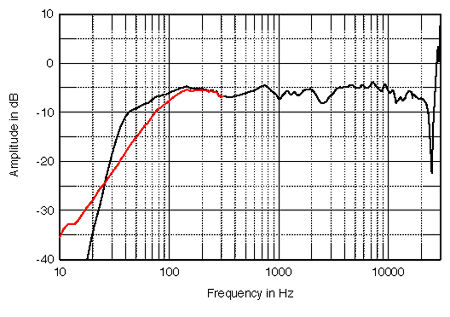
    Differences in the lower midrange are best illustrated by looking at the CDM1 in comparison to the 705.


    B&W 705


    B&W CDM1

    There is a key difference in the lower midrange behaviour of both speakers, I assume that the new PSB silver looks more like the 705, whilst the older model follows the CDM1 response characteristics. From the discussions I have seen here, some favour a slightly elevated midrange as evinced by the CDM1 and CDM1NT, whilst some other folks favour the more neutral midrange of the likes of 705 etc. Other factors have bearing, such as distortion, box noise, driver resonance, alignment etc. I know that RGA disagrees but box noise, more correctly cabinet resonance is most definitely evident in the AN sound and forms a key part of the basic sound signature, imitation is the best form of flattery and anyone who has followed the UK Audio press in recent months will have noticed that there is another player Bosendorfer on the market that regards the suppression of the cabinet vibrations as detrimental to the sound of a loudspeaker. On a humorous note, the Bosendorfer is a narrow baffled design , that follows the now classic Audio Physic approach of placing the woofers to the sides, but here only the side panels are allowed to go into controlled resonance, the very narrow front baffle (and some decoupling) ensures that the panels holding the tweeters remain fairly inert relative to the side panels. Looking at some subjective commentary on AA, it seems that both speakers share broadly similar strengths and weaknesses, their signature colourations decidedly favour solo and simple acoustic pieces.
    The dispersion graphs would be useful, too. RGA's reproduction of the FR measurements for some AN speakers raises more question than it answers as we don't know what the details are.

    I would have liked to see the NRC measurements for my speakers but PSB isn't handing them out. Tom Nousaine apparently had his Stratus Minis measured there and his characterisation was that they were ruler flat! Of course, that's a not very detailed or precise verbal characterization.
    "Opposition brings concord. Out of discord comes the fairest harmony."
    ------Heraclitus of Ephesis (fl. 504-500 BC), trans. Wheelwright.

  2. #2
    BooBs are elitist jerks shokhead's Avatar
    Join Date
    Dec 2004
    Location
    Cal
    Posts
    1,994
    When you guys say bass,you need to say if its musical bass or LFE bass. You mains should be good enough for most musical bass but for the LFE bass,thats the sub's job. I think you can get a good 2-way that will be good at musical bass. I dont think you can get a 3-way that will do LFE,well for under 2 grand a pair?
    Look & Listen

  3. #3
    RGA
    RGA is offline
    Forum Regular
    Join Date
    Nov 2003
    Posts
    5,539
    I have never readthat AN canonly perform well with simple pieces -- they are one of the few companies at the CES that isn;t afraid to play anything at any volume level -- and that was noted again this year when peter on his way to a show picked up several heavey metal cds at a shop and played then at ear splitting levels. He also likes to use a coveted organ piece to show off the E's ability to handle 16hz at very loud levels...the Saint Saens is an obvious busy track -- not a great musical piece in my view and more of a show piece for organ depth. I much prefer busy normal, if repetitive, pieces like Ravel's Bolero or Leahy: Lakefield to see if a speaker can keep up with what is going on...most speakers do such a brutal job with these. if you can't get the basic small ensemble works correct then there is no reason to believe that adding 20 more instruments to the mix is going to make it better.

    Bosendorfer makes arguably the world's best piano's and has been making Audio note's Cabinets for a long while.

    This is not a hard concept - yes the design approach is to control cabinet resonance not to try and throw a bag over it all...you cannot eliminate a cabinet resonance without also taking some of what you WANT to hear with it. So these so-called less coloured speakers I think I Understand why their being called less coloured, they are being damped sometimes heavily -- but as a result they sound like someone is singing with their hand over their mouth -- it sounds less open less resolute have less dynamics and less bass but gee they are less coloured...I guess I don't get why one would want to lose all those things. The cabinet resonance woud show up in the distortion numbers of the speakers...And this is what I don't get...I don't know Bosendorfer's numbers but the AN J and E are under 1% THD and IM across the entire audible band - nothing in a frequency response graph indicates it and certainly not the one I posted. largely because the one I posted doesn;t tell us much -- if the speaker was measured in the corner don;t know don;t knwo the distance don't know if it was in an Anechoic chamber. If it was in a corner --- if you pulled it out from the corner the bass band would drop 3db and that would be virtually dead flat...also what amp is driving it...across the bass band the speaker is 3.6ohms -- tough for a SET, arguably, so a Set may dip that entire band down a SS may not.

    I'm not disagreeing with you TAH, AN does use controleed cabinet resonance to augment the bass, and Bosendorfer may be as well (I know little about what they're doing)...AN is one of those (and not alone) that believes in getting as close to a direct through line as possible from source to speaker with as little to slug the sound as is possible in the stream...it makes no logical sense to continually be stiopping and recorrecting and running things through noise shaping and using things to block sound...I remember nakamichi claiming that their Dragon was far superior with all Dolby noise reduction OFF (indeed, i can;t remember for sure if the Dragon even came with Dolby NR) but for sure they wanted it OFF when listening. yes the NR took some tape hiss away -- but it also seemed to take away the musical message less treble less bass and seemed closed in when NR was on (Dolby C IMO was terrible and S was ok but overrated).

    What is more irritating with the colouration is that these people are noticing only with certain recordings and my argument is that well yes you are noticing more of what was recorded and the recording process than what the speaker is doing. I use Motley Crue Dr. Feelgood album as an example of this -- I have heard resolution on this cd that I've never heard on any other set of speakers. usually with this kind of music at high volumes speakers tend to become thin and very harsh or brittle in the treble and things get conjested...it's actually a fun recording to play at high volume and hear every individual thing going on with a very open and crystal clear clarity.

    Ravel's Bolero when played back to back with an OTO/AN K/Spe combo versus the B&W 705/Bryston 3BSST and Preamp when one plays this piece it has a momentum. The resolution Does not exist in the 705/Bryston combo at the quietest levels it seems forced and strident -- when the crescendo is reached it's game over because the 705 does not have the integration -- the whole thing sounds 2 dimensional and dull as if I heard a recording. The K/OTO has a space a power especially in the treble that jumps out at you. Interestingly you claim to have the exact opposite result I believe. So naturlally I doubt your claim and you will doubt mine, I'll disbelieve you and you will disbelieve me etc ... it really isn't that important though -- because hey I say listen to as much stuff and let people decide for themselves.

    When i recommend people to go to Soundhounds, I always WANT them to listen to B&W and Paradigm et al in a direct head to head session that way I've recommended them listen to speakers that all of you guys love -- even if I come across as a homer I do want them to listen to the stuff everyone else supports.

  4. #4
    BooBs are elitist jerks shokhead's Avatar
    Join Date
    Dec 2004
    Location
    Cal
    Posts
    1,994
    Who says everyone else supports those 2 brands?
    Look & Listen

  5. #5
    RGA
    RGA is offline
    Forum Regular
    Join Date
    Nov 2003
    Posts
    5,539
    Quote Originally Posted by shokhead
    Who says everyone else supports those 2 brands?
    Good point actually --- a lot of people I know don't like either one of those two but I was more referring to this forum where if you say anything even remotely negative about them you are immediately viewed as a heretic and a shill for something else.

    So it is merely taking my view out of the equation as much as possible -- I don;t like the idea of someone buying based off what i have to say -- By all means iof you think you hear things the way I do and vice versa then maybe you'll give something I like a try.

    And I used to be a massive B&W fan until some folks on AA kept bashing them and I was there to defend in rather very long argumentative threads the merits of their speakers. And then a few months later I had to eat crow becausde I actually bothered to give a few of their suggestions a shot - and people know I'm stubborn. I still recommend some B&W's but to be quite frank I can never go back. Paradigm is basically - I like some of their speakers -- but I would not want them.

    Rather than get into arguments over preferences WHY BOTHER? People here can go to the place I go to and listen to it for themselves and report back...one guy recently on AA sent me an e-mail under a different monicker who has argued with me in the past over AN -- went to Soundhounds and is now going to sell his current system. He just bought the speakers not long ago and the speakers were the very expensive speakers in the title thread discussed along with companies' top of the line amplifier.

    At the end of the day everyone sits in some sort of camp and I suppose ti makes sense -- people are adament about electrostats, magnepans, direct radiators, multi-directional speakers -- Skeptic for instance things direct radiators -- all of them -- are utter crap. Other people can ONLY listen to speakers that don;t have a box -- others want horns and nothing else. So it's not surprising that that some will be in the AN camp while another one of the other camps.

    the biggest reason I like AN above everything else I have heard is because I LOVE msot everything about what a good Stat does and what gfood horns do but to me they both tend to have some real big drawbacks...AN to me took the best out of what both offer up -- gave up a smidge to both in that the you give a little bit of the brute Dynamics and volume capability of the Horns and a bit of that air in the Stats...JNR had the Quads for 20+ years and the only box he could stomach and replaced his Quads for was - AN. Horn fans who want a more linear response and less shouty presntation give up some efficiency and volume for a smoother balance.

    people who love big Stats and Big horns like the Avante Guardes or even the retro horns like the K-Horn I can identify with more -- and even Skeptic in a way of his view on direct radiators --- because quite frankly so far the only Boxed speaker maker I would buy is AN...and then I would move to the open horns or Electrostats(not ML)...because the boxes sound stifled nasal shut in and boxy with one note bass. And gee the stats and horns also like SETs -- coincidence ?
    Last edited by RGA; 03-16-2005 at 10:09 PM.

  6. #6
    It's just a hobby
    Join Date
    Oct 2004
    Location
    London, UK
    Posts
    808
    RGA, are you really sure of what you are saying that Bosendorfer builds Audio Note cabinets? I hope you realise that Bosendorfer is based in Austria, not Denmark nor Sweden nor Netherlands, Audio Note is based in Hove, England it is highly improbable that they are importing their cabinets from Austria! the logistics are highly suspect.

    I think you misundertood me, I said the the signature colourations favour solo and simple acoustic pieces not the other way round, I will respond with a longer post later but your graph validates the subjective opinion that the ANs are severely rolled off in the high treble, this roll-off is less severe as you move off-axis as per the graph, the dispersion graphs will be very useful in analyzing the lower midrange and bass behaviour.
    Last edited by theaudiohobby; 03-17-2005 at 06:27 AM. Reason: grammer correction

  7. #7
    Loving This kexodusc's Avatar
    Join Date
    Nov 2003
    Location
    Department of Heuristics and Research on Material Applications
    Posts
    9,025
    Quote Originally Posted by RGA
    The cabinet resonance woud show up in the distortion numbers of the speakers...And this is what I don't get...I don't know Bosendorfer's numbers but the AN J and E are under 1% THD and IM across the entire audible band - nothing in a frequency response graph indicates it and certainly not the one I posted. largely because the one I posted doesn;t tell us much -- if the speaker was measured in the corner don;t know don;t knwo the distance don't know if it was in an Anechoic chamber.
    Hmmmm...no, cabinet resonance doesn't necessarily (if at all) show up in distortion numbers...that's usually more mechanical...though it might show up in the FR plots. FR plots I don't think capture enough though...at any given point only one frequency response is being measured, it's rare that our music emits only 1 frequency at a time.
    I'm not aware of any spec tests for measuring colorations, though we can all hear it when it's present.

    I think your on to something about cabinets and damping though. A well built cabinet (ported) doesn't need much, I've found poorer cabinets (inexpensive ones like your entry level PSB's, Paradigm's, B&W's, Athena's) tend fill a bit more. The trade off is absorbing some energy inside, allowing for less release of the energy (which I think relates to transient response, attack, and decay), and making a cabinet "appear" bigger to the woofer, more bass extension and SPL, not necessarily better sound quality though. For sealed cabinets, you often want to damp the bejesus out of it or you'll hit the other extreme (though this isn't always the case for subwoofers)...I think it goes back to the driver and crossover though, a "faster" midwoofer (which I recently learned use to be called a squawker?) probably would allow for more damping to a point. I think it comes down to taste, and the designer finding the balance he or she (or their customers) prefer.

    I've played around with some damping amounts in some of my speakers...right away I notice too much stuffing chokes off the bass...the cabinet can become too big for the woofer (bad), and it seems to reach all the way into the lower midrange which can be really annoying (seems to affect soundstaging too). Upper midrange seems unaffected, proably around the point were the sounds become more directional and don't have much interaction with the cabinet, though I'm not sure exactly.

    I don't know or care who builds AN's cabinets, but I can say that I've personally stood on my uncle's AN E's cabinets, not that my 185 lbs frame is massive, but they didn't give at all...a primitive test admittedly, but most people don't dare climb some other speakers. That says something.

  8. #8
    It's just a hobby
    Join Date
    Oct 2004
    Location
    London, UK
    Posts
    808

    Waterfall plots are helpful in these respects

    I'm not aware of any spec tests for measuring colorations, though we can all hear it when it's present.
    Cabinet and some driver resonances can be seen on waterfall plots as little spikes of delayed energy. cabinet coloration especially, more correctly symphatic cabinet vibration can indeed be pleasing on certain acoustic instruments as it makes wooden acoustic instruments sound more woody, personally I got annoyed at the unnatural decay and banished it from my speakers. Saying that, I am a fan of planar speakers so I am especially sensitive to cabinet resonance.

  9. #9
    Loving This kexodusc's Avatar
    Join Date
    Nov 2003
    Location
    Department of Heuristics and Research on Material Applications
    Posts
    9,025
    Your right, I forgot about waterfall plots...you rarely see enough of those for them to be useful, I wonder why?
    Interestingly enough, every speaker I've heard that looks good on either paper, FR or waterfall plot has never overly impressed me. Some mediocre measuring speakers have though. Something's obviously missing in our evaluation methods (or known and just never provided).

    Is anyone aware of test where someone measured the properties of a live performance against the recording of that same performance on different speakers, etc??? I don't know what test you'd use for this, but I have a feeling that you need to have a valid point of reference (ie: the real thing) other than +/- 0 dB, 0.00% THD, etc...

  10. #10
    Forum Regular
    Join Date
    Nov 2003
    Posts
    127

    Lightbulb Perfect Example

    The B&W 705's. Stereophile did a review on them and not only was the waterfall plot extremely clean but the frequency response was very smooth as well. I wouldn't take these speakers for free you know why?? Becuase when I listened to them with a variety of recordings that I own not ONE was fun to listen to. The midrange seemed too forward and hard and the top end was rolled off. Now I can understand graphs for amplifiers because that equipments job is easy. Make the input signal bigger. Period. I can understand that the people who don't like solid state amps because they clip hard but hey dont drive the amp to clipping and there's no problem! Speakers on the other hand are actually energizing the room and must be listened to with a variety of recordings and a developed ear.


    Quote Originally Posted by kexodusc
    Your right, I forgot about waterfall plots...you rarely see enough of those for them to be useful, I wonder why?
    Interestingly enough, every speaker I've heard that looks good on either paper, FR or waterfall plot has never overly impressed me. Some mediocre measuring speakers have though. Something's obviously missing in our evaluation methods (or known and just never provided).

    Is anyone aware of test where someone measured the properties of a live performance against the recording of that same performance on different speakers, etc??? I don't know what test you'd use for this, but I have a feeling that you need to have a valid point of reference (ie: the real thing) other than +/- 0 dB, 0.00% THD, etc...

  11. #11
    Forum Regular Woochifer's Avatar
    Join Date
    Dec 2001
    Location
    SF Bay Area
    Posts
    6,883
    Quote Originally Posted by kexodusc
    Hmmmm...no, cabinet resonance doesn't necessarily (if at all) show up in distortion numbers...that's usually more mechanical...though it might show up in the FR plots. FR plots I don't think capture enough though...at any given point only one frequency response is being measured, it's rare that our music emits only 1 frequency at a time.
    I'm not aware of any spec tests for measuring colorations, though we can all hear it when it's present.
    Stereophile does spectral decay plots using an accelerometer attached to the speaker cabinet as one of its standard measures. Just as the port output figures into the frequency response, so too does the cabinet resonance, except that I think that the effect from the cabinet potentially also figures into the time domain part of the reproduction.

    Quote Originally Posted by kexodusc
    I think your on to something about cabinets and damping though. A well built cabinet (ported) doesn't need much, I've found poorer cabinets (inexpensive ones like your entry level PSB's, Paradigm's, B&W's, Athena's) tend fill a bit more. The trade off is absorbing some energy inside, allowing for less release of the energy (which I think relates to transient response, attack, and decay), and making a cabinet "appear" bigger to the woofer, more bass extension and SPL, not necessarily better sound quality though. For sealed cabinets, you often want to damp the bejesus out of it or you'll hit the other extreme (though this isn't always the case for subwoofers)...I think it goes back to the driver and crossover though, a "faster" midwoofer (which I recently learned use to be called a squawker?) probably would allow for more damping to a point. I think it comes down to taste, and the designer finding the balance he or she (or their customers) prefer.
    My issue with highly resonant cabinets is that the cabinetry does not resonate consistently throughout the frequency band. It's much easier to find a driver with an even and consistent tonal response, than to design a resonant cabinet that does not overly emphasize certain frequencies. It might be possible to find a combination that works together constructively, but that seems to be more art than science.

    In all of my listenings through the years, speakers with particularly resonant cabinets can sound fine with specific types of sources, but they also produce all kinds of other inconsistencies. Just because a string instrument uses cabinet resonance to create its signature sound is hardly a logical argument that speakers should take the same approach. First off, a string instrument such as a violin, string bass, or piano works in concert with the resonating characteristics of the body to amplify the effect from a string vibration. Other acoustic instruments though use other types of body materials and wave propagation methods to create those sounds, yet I never hear anyone proposing that we go with speakers installed inside of brass tubing just because that's what trumpets and tubas use.

    Quote Originally Posted by kexodusc
    I've played around with some damping amounts in some of my speakers...right away I notice too much stuffing chokes off the bass...the cabinet can become too big for the woofer (bad), and it seems to reach all the way into the lower midrange which can be really annoying (seems to affect soundstaging too). Upper midrange seems unaffected, proably around the point were the sounds become more directional and don't have much interaction with the cabinet, though I'm not sure exactly.

    I don't know or care who builds AN's cabinets, but I can say that I've personally stood on my uncle's AN E's cabinets, not that my 185 lbs frame is massive, but they didn't give at all...a primitive test admittedly, but most people don't dare climb some other speakers. That says something.
    The relationship between the size of the port opening and the volume of the speaker cabinet creates a specific effect on the frequency response that the driver generates. When you stuff a ported cabinet, you also change the volume, which in turn changes the frequency response curve if the port opening remains constant. The effect of the cabinet adds yet another variable to the mix. There are limits to every extreme, that's why every speaker design out there represents a compromise of some sort.

  12. #12
    Loving This kexodusc's Avatar
    Join Date
    Nov 2003
    Location
    Department of Heuristics and Research on Material Applications
    Posts
    9,025
    Quote Originally Posted by Woochifer
    Stereophile does spectral decay plots using an accelerometer attached to the speaker cabinet as one of its standard measures. Just as the port output figures into the frequency response, so too does the cabinet resonance, except that I think that the effect from the cabinet potentially also figures into the time domain part of the reproduction.

    My issue with highly resonant cabinets is that the cabinetry does not resonate consistently throughout the frequency band. It's much easier to find a driver with an even and consistent tonal response, than to design a resonant cabinet that does not overly emphasize certain frequencies. It might be possible to find a combination that works together constructively, but that seems to be more art than science.

    In all of my listenings through the years, speakers with particularly resonant cabinets can sound fine with specific types of sources, but they also produce all kinds of other inconsistencies. Just because a string instrument uses cabinet resonance to create its signature sound is hardly a logical argument that speakers should take the same approach. First off, a string instrument such as a violin, string bass, or piano works in concert with the resonating characteristics of the body to amplify the effect from a string vibration. Other acoustic instruments though use other types of body materials and wave propagation methods to create those sounds, yet I never hear anyone proposing that we go with speakers installed inside of brass tubing just because that's what trumpets and tubas use.

    The relationship between the size of the port opening and the volume of the speaker cabinet creates a specific effect on the frequency response that the driver generates. When you stuff a ported cabinet, you also change the volume, which in turn changes the frequency response curve if the port opening remains constant. The effect of the cabinet adds yet another variable to the mix. There are limits to every extreme, that's why every speaker design out there represents a compromise of some sort.
    Your preaching to the choir here.

    The only thing I would add on cabinet resonance is, from my own experience, it seems a highly resonant cabinet has a few frequencies (or maybe ranges) where it triggers a response, and sometimes it's only noticeable at higher SPL's.

    Just as bad a cabinet with resonance issues (but often overlooked) is a cabinet with excess leakage. Take a look at some older speakers, poor foam surrounds, butt joints with only glue or even nails/screws to seal the cabinet...yikes. Lots of energy lost there...

Thread Information

Users Browsing this Thread

There are currently 1 users browsing this thread. (0 members and 1 guests)

Posting Permissions

  • You may not post new threads
  • You may not post replies
  • You may not post attachments
  • You may not edit your posts
  •