Results 1 to 25 of 26

Hybrid View

  1. #1
    Music Junkie E-Stat's Avatar
    Join Date
    Dec 2003
    Posts
    5,462
    Quote Originally Posted by Feanor View Post
    Yet another high-end class D amp announced:
    Don't forget the Mark Levinson 53.

    What is unusual about this design is moving the switching frequency up from around 400 khz to 2 Mhz.

  2. #2
    Shostakovich fan Feanor's Avatar
    Join Date
    Jun 2002
    Location
    London, Ontario
    Posts
    8,127
    Quote Originally Posted by E-Stat View Post
    Don't forget the Mark Levinson 53.

    What is unusual about this design is moving the switching frequency up from around 400 khz to 2 Mhz.
    Gorgeous (looking) amp as you'd expect from Mark Levinson ...


    If I'm not mistaken, class D design that shift the switching frequencies are according to various schemes are becoming the fairly common these days. But I suppose sophistication in this respect is a differentiator of pricier equipment.

  3. #3
    Music Junkie E-Stat's Avatar
    Join Date
    Dec 2003
    Posts
    5,462
    Quote Originally Posted by Feanor View Post
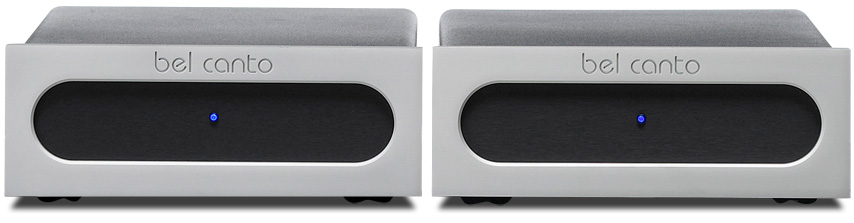
    Gorgeous (looking) amp as you'd expect from Mark Levinson ...
    Looks good under the hood, too.

    Exposed

    Quote Originally Posted by Feanor View Post
    ...class D design that shift the switching frequencies are according to various schemes are becoming the fairly common these days
    Hmmm. That is not my understanding. From the last link, there is commentary about linking multiple bridges to achieve the higher sample rate. Along with the increased rate comes additional RFI shielding needs, too.

  4. #4
    Shostakovich fan Feanor's Avatar
    Join Date
    Jun 2002
    Location
    London, Ontario
    Posts
    8,127
    Quote Originally Posted by E-Stat View Post
    Looks good under the hood, too.

    Exposed

    Hmmm. That is not my understanding. From the last link, there is commentary about linking multiple bridges to achieve the higher sample rate. Along with the increased rate comes additional RFI shielding needs, too.
    I don't recall all the variable switching frequency references I seem to recall, however NuForce seems to say something like it ...
    Quote Originally Posted by Nuforce
    NuForce's amplifier technology is based upon the principle that a power oscillator can be modulated by an audio signal so that it produces an amplified audio signal obtained with a reconstruction filter, without the bandwidth limitation of a fixed frequency carrier-based conventional PWM control. It uses analog modulation technique and close-loop control systems. Therefore NuForce refer to its audio amplifier as Analog Switching Amplifier.
    Anyway Levinson talks about their proprietary technology ...
    Quote Originally Posted by Mark Levinson
    The Nš53 removes switching noise without affecting the audio with the introduction of the new patented and proprietary Interleaved Power Technology (IPT) which, among other things, raises the switching frequency of the Nš53 to an extremely high 2MHz ...
    The Nš53 has also overcome the “dead band” problem. Dead bands are silent gaps in the audio output, created when the output devices driving the positive half of the signal and the negative half of the signal are both turned of ... The Nš53, on the other hand, was designed using a patented technology that allows both sets of output devices to be on simultaneously for short periods
    This is all interesting and goes to justify the definitely high-end, $25.000 price. Considering that $600 class D's sound pretty decent, the 42x price tag might be an example of hyper-diminishing returns.
    Last edited by Feanor; 03-15-2012 at 03:07 PM.

  5. #5
    Music Junkie E-Stat's Avatar
    Join Date
    Dec 2003
    Posts
    5,462
    Quote Originally Posted by Feanor View Post
    Anyway Levinson talks about their proprietary technology ...
    I suspect that what's really different is addressing the bandwidth limits of the power MOSFETs. Since the modulation occurs in the analog world, the outputs are now dealing in the AM band.

    Quote Originally Posted by Feanor View Post
    ...the 42x price tag might be an example of hyper-diminishing returns.
    Or recognizing the potential of the concept. Similarly, I find there is nothing inherently wrong with digital recordings - the limitations are shaped by the frequency and word size decisions. I find a parallel with switching amplifiers. Getting the filter noise further out a couple of octaves is a logical progression for improving the technology.

  6. #6
    Shostakovich fan Feanor's Avatar
    Join Date
    Jun 2002
    Location
    London, Ontario
    Posts
    8,127
    Quote Originally Posted by E-Stat View Post
    Quote Originally Posted by Feanor
    ...the 42x price tag might be an example of hyper-diminishing returns
    Or recognizing the potential of the concept. Similarly, I find there is nothing inherently wrong with digital recordings - the limitations are shaped by the frequency and word size decisions. I find a parallel with switching amplifiers. Getting the filter noise further out a couple of octaves is a logical progression for improving the technology.
    Doubtless it's a good thing that the well-heeled will sponsor the advancement of the state of the art. That is regardless of whether the actual sound difference is huge or slight. For my part, I'm constrained to wait 'till the high rollers have been skimmed and the recent SOTA has tricked down to the masses.
    Last edited by Feanor; 03-17-2012 at 05:58 AM.

Thread Information

Users Browsing this Thread

There are currently 1 users browsing this thread. (0 members and 1 guests)

Posting Permissions

  • You may not post new threads
  • You may not post replies
  • You may not post attachments
  • You may not edit your posts
  •