Page 3 of 4 FirstFirst 1 2 3 4 LastLast
Results 51 to 75 of 80
  1. #51
    Vinyl Fundamentalist Forums Moderator poppachubby's Avatar
    Join Date
    Aug 2009
    Location
    Analog Synagogue
    Posts
    4,363
    Hahaha...not a very engaged audience here. I like it fine. Just as the big band/orchestra flavour, I think you have a very distinct idea about what the sound of jazz is, at least to you. This album was the beginning of Davis' attempts to start smashing that. Just a big mess of horns without piano, etc. Listenable, but nothing to get you out of your seat.

  2. #52
    Phila combat zone JoeE SP9's Avatar
    Join Date
    Jun 2003
    Location
    Philadelphia, PA
    Posts
    2,710
    Quote Originally Posted by noddin0ff
    What! No one out there bold enough to say they like Sketches of Spain? You shouldn't take my word for it.
    I like it. I have it on LP and CD. There isn't much by Miles I don't like.

    PC: Have you heard Freddie Hubbard's Red Clay and First Light? Both on CTI
    ARC SP9 MKIII, VPI HW19, Rega RB300
    Marcof PPA1, Shure, Sumiko, Ortofon carts, Yamaha DVD-S1800
    Behringer UCA222, Emotiva XDA-2, HiFimeDIY
    Accuphase T101, Teac V-7010, Nak ZX-7. LX-5, Behringer DSP1124P
    Front: Magnepan 1.7, DBX 223SX, 2 modified Dynaco MK3's, 2, 12" DIY TL subs (Pass El-Pipe-O) 2 bridged Crown XLS-402
    Rear/HT: Emotiva UMC200, Acoustat Model 1/SPW-1, Behringer CX2310, 2 Adcom GFA-545

  3. #53
    Vinyl Fundamentalist Forums Moderator poppachubby's Avatar
    Join Date
    Aug 2009
    Location
    Analog Synagogue
    Posts
    4,363
    Quote Originally Posted by JoeE SP9
    PC: Have you heard Freddie Hubbard's Red Clay and First Light? Both on CTI

    I have Red Clay on vinyl and CD. I haven't even heard First Light. Have you got it Joe? I'm avoiding the "download all his stuff" route, and listening to things as I physically acquire them. There's a nice record show coming to town in May. One of the vendors has a fine Hubbard collection. He also has the last Benson I need, White Rabbit.

    I'm finding that some of Hubbard's best work is as a sideman. Red Clay is a treat, as is Here to Stay. I think my favorite performance, so far, has got to be his work on Hancock's Empyrean Isles. With no other brass accompaniment, he did a wonderful job at being improvisational while pulling off some of his greatest melodies. The dynamic of that album, and the challenges it presented him, are an excellent example of Hubbbard's greatness.

    I've been listening to Roy Hargrove lately. If you haven't heard it, "The Vibe" is a fantastic album.

  4. #54
    Vinyl Fundamentalist Forums Moderator poppachubby's Avatar
    Join Date
    Aug 2009
    Location
    Analog Synagogue
    Posts
    4,363
    Hey noddinoff, what are your interests in jazz? Favorite instrument? Favorite player? I already presume hard bop is your favorite period/style. Do you listen to vinyl or just CD?

    To get a better handle on Davis, I would suggest listening to some other players. As mentioned in this thread already...

    Lee Morgan
    Freddie Hubbard
    Roy Hargrove

    Obviously there are many to choose from. Those three are "greats" with very accessible styles.

  5. #55
    Retro Modernist 02audionoob's Avatar
    Join Date
    Jun 2008
    Location
    Dallas, TX
    Posts
    2,908
    I agree with the approach proposed by the inimitable poppachubby. I like to hear the great artists' followers and predecessors and get a feel for the whole thread of the art.

  6. #56
    Sure, sure... Auricauricle's Avatar
    Join Date
    Jun 2008
    Location
    Yonder
    Posts
    2,886
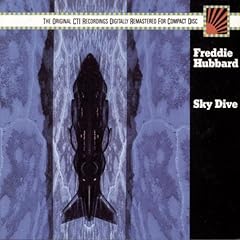
    I like Freddie Hubbard's work with CTI and own a few. I think by now I have supplied you with enough hosannas for First Light, which any self respecting jazz aficionado must own. Red Clay is another great choice to be sure, but don't quit until you have found a good, crisp copy of Sky Dive. This album is very musical and technically very engaging. Hubbard's playing, in the tradition of all his CTI recordings is just superb, and the arrangements are sharp, focused and keep me tapping my toes for hours....

    Check out the line up: Ron Carter, George Benson, Billy Cobham, Airto, Hubert Laws, Keith Jarrett and, of course, Freddie. Starting with the first track, Povo, a 14:43 funky strut number, the playing is restrained but not too much so. Hubbard's playing is given its berth and Freddie plays as though he has a story to tell. His horn just shimmers through the riffs, but never running astray from his crew, and he lets Laws and Benson get their licks in and graciously steps aside. Always a pro, that Freddie...

    Winding things down a little bit is In a Mist. Freddie plays the opening passage with a full, round sound that belies the trumpet; for a moment you might swear it's a cornet, but Freddie plays through and soon enough, the brassy edge comes back, red hot. This is followed by the first playing of Naturally, a sweet little number played with sparing and easy-as-you-do-it charm. Just 5:54 long, it's a nice come down from its predecessor, just a dollop of whipped cream for the cool sundae.

    Soon enough the music fades and we hear something familiar...The Godfather Theme? Yep. But this time it's Freddie playing it, and he plays it with a languid grace that is almost saucy. The notes just bend through the horn, as Ron Carter's bass thrums along. And then, Keith gets to play, and his piano opens like a crocus...right there.

    And then, finally, the CTI sound returns with Sky Dive. Crisp, clean, funky, but never too much. The swing is easy on the ears as it is on the mind, the boys are in sync and all is fine. Freddie floats through the piece, light on his feet as ever, just a few deft pops here and there, a gentle nudge there and he's done. Benson comes through now, just plucking and grinning--you know he is, as Cobham's drums just tip and tap to the beat....

    As though Hubbard has one more thought, Naturally returns with one more pass, quick before the disc is over. Now, the musicians are getting ready to go, its been a great jam and it's time to go home. No one's sad, though, they feel good, it's been a hoot and everybody's feeling a spring in their step and looking forward to the next gig.

    Anyway, that's just my two bits....Just needed to free associate a bit.

    Last edited by Auricauricle; 03-19-2010 at 10:54 AM.

  7. #57
    Big science. Hallelujah. noddin0ff's Avatar
    Join Date
    Mar 2004
    Location
    X
    Posts
    2,286
    Quote Originally Posted by poppachubby
    Hey noddinoff, what are your interests in jazz? Favorite instrument? Favorite player? I already presume hard bop is your favorite period/style. Do you listen to vinyl or just CD?

    To get a better handle on Davis, I would suggest listening to some other players. As mentioned in this thread already...

    Lee Morgan
    Freddie Hubbard
    Roy Hargrove
    I'm probably bop and forward...'cept I wouldn't part with Billy Holiday. I don't think I'm too focused although, so far I'm not an acid, smooth, or fusion jazz type. I tend to anchor myself around Mingus (I like big band but I like it messy or swinging) and Coltrane in the classic department. Tend more toward sax, piano, drum and bass. Have a few Hubbard's no Roy. In the trumpet arena I've never picked too much up. Nicholas Payton and Terrence Blanchard being recent exceptions. Lately, I've been liking the current latin influxes into Jazz (not necessarily Jazz to latin, if that means anything). Although not really recent, Bebo Valdez is great. I used to grab up Joshua Redman (Sax) but I think I like his Coltrane-like album Beyond most. Put in another plug for William Parker Quartet: Petite Oiseau. Been digging into female vocalists on and off.

    Guess I don't compartmentalize myself well. There's a lot of great classic stuff. Too much actually to take it all in. Plus, I like to keep an ear out for new sounds.

    "It's all music." -- Duke Ellington

  8. #58
    Vinyl Fundamentalist Forums Moderator poppachubby's Avatar
    Join Date
    Aug 2009
    Location
    Analog Synagogue
    Posts
    4,363
    Nice write up Auric, I'll be checkin that one out.

    Noddin you sound like you have a nice, well rounded collection. I tend to the trumpet myself. I think Blue Note were exceptional for their range of sax players. One of my faves lately has been Joe Henderson. Inner Urge is a masterpiece. I have been spinning Barcelona also, but it'd be too avant garde for you.

  9. #59
    Big science. Hallelujah. noddin0ff's Avatar
    Join Date
    Mar 2004
    Location
    X
    Posts
    2,286
    Quote Originally Posted by poppachubby
    Nice write up Auric, I'll be checkin that one out.

    Noddin ..... I have been spinning Barcelona also, but it'd be too avant garde for you.
    Well, depends on the genre of avant garde. I love John Lurie and The Lounge Lizards for instance. But I'll keep Joe Henderson in mind.

    I think you may be spot on about Blue Note and Sax. I think most of my introduction purchases were Blue Note. I didn't know anyone else particularly interested in Jazz at the time so I just purchased by Label and by 4 or 5 stars in Downbeat. Mostly served me well. :-)

  10. #60
    Big science. Hallelujah. noddin0ff's Avatar
    Join Date
    Mar 2004
    Location
    X
    Posts
    2,286

    #12: Directions (1960-70)


    Song Of Our Country (1960)
    'Round Midnight (1961)
    So Near, So Far (1963)
    Limbo (1967)
    Water On The Pond (1967)
    Fun (1968)
    Directions I (1968)
    Directions II (1968)
    Ascent (1968)
    Duran (1970)
    Konda (1970)
    Willie Nelson (1970)

    Released in 1981, but spans 1960-70 hence the placement at #12 in the chronology.
    Line up
    : Miles (trumpet) and a host of others

    I needed to take some time off from my Mile’s project. At first, this seemed like a good place to take a break. As the days and weeks passed, however, this album became an albatross around my neck. It’s another unfairly positioned album and placed in the chronology at 1960 when most of the tracks flash forward past the next 9 albums. On top of that, it is a 2 disk set and, thus, quite a lot to absorb. It became impossible for me to take it in in one sitting. I couldn’t encapsulate the whole thing in a few comments. I had to go song by song. Actually though, in retrospect I can make a general statement that I wouldn't run out and buy this. I didn't get much enjoyment out of it as an album and it was rather long and inconsistent as a compilation.

    Song by song…

    1) Song of Our Country:
    My first reaction was, “Oh, no! Please not that bonus track from Sketches of Spain. But then this was actually better than that other version. I guess it didn’t suck enough to deserve inclusion on SkofSp. It has some bounce and swiing that was lacking from SkofSp. Heck, it even sounds like they Miles might be enjoying himself.

    2) ‘Round Midnight:
    Recorded Live at the Blackhawk, San Francisco, 1961.
    Includes Wayne Shorter (tenor), Wynton Kelly (piano) Paul Chambers (Bass), Jimmy Cobb (drums)
    Wow. Miles adds some high register sizzle on this. Lots of interesting things going on in this T. Monk standard. Even some latin rhythms to close it out. Overall, it meanders more than other versions I recall.

    3) So Near, So far:
    George Colman (tenor), Victor Feldman (piano), Ron Carter (b), Frank Butler (d)
    An uptempo, open, bouncy and happy sounding piece. The opening bass really struck me as a hallmark sound of what I associate with the albums I’ve heard from the 70s. Tentative and non-committal, open to possibilities, begging for expansion. I know that’s a lot to infer from 8 or so bars. Especially when the rest of the track sounds more conventional. I guess you could claim that this is transitional, or at least hints at the upcoming transition in sound.

    4) Limbo (W. Shorter, composition):
    Shorter (tenor), Herbie Hancock (piano), Buster Williams (bass), Tony Williams (drums)
    A notable line up with Hancock, Shorter, and T. Williams. This is also sound that I associate with jazz from the late 60s-early 70s, more so with piano and drums now. That optimistic, maybe naïve or ‘world is full of wonder’ sound and open sound with a little trace of avant garde. Things I have that I think of as I listen include Herbies Speak Like a Child, McCoy Tyner Expansions. I can’t quite describe what Miles and Shorter do with their harmony on their entrance (should’ve paid attention in intro to music theory instead of checking out legs). Something about the tight intervals. Maybe someone can explain it to me. Could just be a novel modal scale? You can sort of tell from the album titles the gist of what I think it trying to be communicated in the music. The ‘free your mind’ ‘be like a child thing’. Track seems longer than it is…doesn’t really go anywhere. ‘Limbo’ is apt.

    5. Water on the Pond (M. Davis):
    Shorter (tenor), Herbie Hancock (elect. piano), Joe Beck (elect guitar), Ron Carter (bass), Tony Williams (drums).
    Getting a little funky now. Electric instrumentation taking over. Propulsive and straight ahead rhythm, bass line. Little splashes of color from T. Williams and Herbie. And then a light lilt as Miles enters on trumpet. I suppose you could imagine ripples and gentle waves, some raindrops. Wonder if water on the pond is a regional expression…the pond is water, I don’t get the ‘on’.

    6. Fun (M. Davis):
    Shorter (tenor), Herbie Hancock (elect. harpsichord), Bucky Pizzarelli (elect guitar), Ron Carter (bass), Tony Williams (drums).
    Didn’t care for this one much. A bit of a hodge-podge that starts with a ‘fiesta’ opening and then noodles off somewhere.

    7&8. Directions I & II (J. Zawinul) :
    Shorter (tenor), Chick Corea (elect. piano), Herbie Hancock (elect. piano), Josef Zawinul (elct. Piano, org), Dave Holland (bass, elect bass) Jack DeJohnette (drums, percussion), Teo Maceero (percussion).
    Well. The line up is dramatically different here. Three electric pianos for one. Two percussionists. Nobody but Miles really taking up any sense of melody. Mostly a driving, noodle-y piece with short bursts of notes. II seems more melodic than I. Note that these have Zawinul as composer.

    9. Ascent J. Zawinul):
    Shorter (tenor), Chick Corea (elect. piano), Herbie Hancock (elect. piano), Josef Zawinul (elct. Piano, org), Dave Holland (bass, elect bass) Jack DeJohnette (drums, percussion), Teo Maceero (percussion).
    A slower, sort of pretty bit of noodley. Some nice soloing by Shorter. I saw Shorter live with Hancock about 11? years back with Hanckock. Shorter can get a bit cerebral, methinks. But, he can really nail a piece with his expressiveness and control thereof. Maybe Ascent is forgettable, however, Shorter really came through in this. Miles sounds really sterile in comparison (compare shorter @4:35-7:15 and briefly @9:20-9:40 with Miles @9:50

    10. Duran (M. Davis):
    Wayne Shorter (soprano sax), Bennie Maupin (bass clarinet), John McLaughlin (elect guitar), Dave Holland (elect. bass), Billy Cobham (drum).
    Here’s a track that asks, and probably deserves to be noticed. Good ol’ funky bass line, some fuzzy electic guitar. Pretty good meeting of rock and funk and Miles. I think what makes this stand out in my auditory memory and sets the hook is the bits of drop time here and there. They don’t happen much, but they catch your attention and make you realize you were actually jammin’ along with the tunes. Shorter and Maupin really come together well. All in all, I’d say this is a standout piece. Miles provides nice, almost counter-statement to the group that gels the piece. …or somesuch BS on my part…

    11. Konda (M. Davis):
    Keith Jarrett (e-piano), John McLaughlin (e guitar), Jack DeJohnette (drum) Airto Moreira (percussion):
    A bit of a let down after Duran. Pleasant enough. There’s a nice happy pastoral-organic feel to the first two-thirds then gets a little more rocking toward the end. I’ll back off on my ‘let down’ statement’. Konda has much more to it than Duran, more feel, more complexity. More of a hidden gem, I suppose. Not sure what accompanies Miles at 2:40…e-piano? Might by some midi thing from Miles? There’s no sax or reed credited. I’m no musician. There’s a berimbau mentioned but I don’t know what one sounds like. Clearly we’re getting into altering sound, however. Good percussion. Makes me wish I was bold (or young) enough to put on some tie-dye and go dance in the dandelions with some good looking hippie chicks.

    12. Willie Nelson (M. Davis):
    Steve Grossman (sopr. sax), John McLauglin (e guitar), Dave Holland (e bass), Jack DeJohnette (drum)
    Like Duran, on the funky side. I have no idea why it’s called Willie Nelson, unless they were also smokin’ a big joint on this. Didn’t care for this track very much. Not really sure why. Sounded a little cliché? The bits of phrases just seemed to remind me of other better jazz riffs.


    I’m happy to be able to move on to the regular temporal progression. I'm already listening to the next up and finding it, by comparison, rather pleasant and old timey.

    Next up: Someday My Prince Will Come

  11. #61
    Big science. Hallelujah. noddin0ff's Avatar
    Join Date
    Mar 2004
    Location
    X
    Posts
    2,286

    #13: Someday My Prince Will Come (1961)


    Someday My Prince Will Come
    Old Folks
    Pfrancing
    Drad Dog
    Teo
    I Thought About You
    Blues No. 2*
    Someday My Prince Will Come [Alternate]*


    Line up

    Miles (trumpet), Hank Mobley (tenor, not on track 5), John Coltrane (tenor, 2nd Tenor on track 1, track 5) , Wynton Kelly (piano), Paul Chambers (double bass), Philly Joe Jones (drums, track 2 only), Jmmy Cobb (drums, all but track 2).

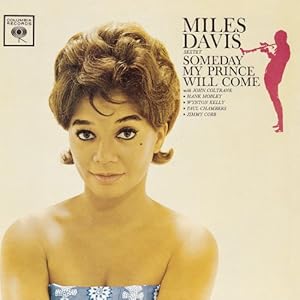
    I actually found it very comforting to come back to Someday My Prince Will Come after Directions. The title track opens with some tentative bass notes that made me think the tone of the album would be more modern than it turned out to be. It gave way to happy, warmer tones, gentle playful chords on the piano, and romantic sounds from Miles. The way Someday romances reminded me of 1958 Miles. The beauty on the album cover, Frances Taylor, is Miles’ wife at the time.

    It doesn’t quite have the magic spark that would make it a great album but it is certainly a worthy one. I’m not sure if I’m just a Coltrane fan-boy or not, but as I was listening (before looking at the line up, btw) the album came across as warm, inviting, and comfortable. Only in a couple sections did it really seem to expand into something tha reached out andt grabbed my attention. A quick look at the notes and, yup, those were the Coltrane bits. However, even without the Coltrane, this could easily be a jazz fan’s favorite album of the moment. Minus Coltrane, it’s still exceptionally sweet, balanced and sometimes nostalgic, working subtle magic with restraint and a nice touch.

    There’s a few reviews I read that commented that it’s a bit unfair to laud Coltrane in comparison to Mobley, and that’s probably true. However, Coltrane puts his mark out and it’s difficult not to notice. The booklet says that Miles was about to wrap up recording Someday when Coltrane made a surprise appearance between sets he was performing at the Apollo. And there you have it. Drad Dog is apparently a tribute to the supportive president of Columbia records, Goddard Leiberson, spelling his name backward. Pfrancing - Prancing frantic dancing - is a tribute to Frances.

    More on this album than on the earlier albums, I found myself really enjoying Miles’ playing. He really seemed to be in a good zone and. Interesting phrases and melodies, real nice emotive playing. I didn’t feel he was controlling his instrument to the point of taking the life out of the music (contrast to my favorite punching bag, SkofSp, e.g.). Miles came across as more personal, and more integrated with the group instead of taking the role of intellectual leader. Of course, this could very well be because of the group who, with the exception of Coltrane, followed his lead beautifully. (Coltrane took the lead, beautifully)

    Teo is the interesting song of the album for me, exotic, intense and languid. I liked Cobbs drumming too. A lot goes right on Teo.

    This is an album every well stocked jazz fan should have and a nice surprise for me as I make my way through the box.

    Next up: Friday Night -- Miles Davis in Person at the Blackhawk, San Francisco

  12. #62
    Vinyl Fundamentalist Forums Moderator poppachubby's Avatar
    Join Date
    Aug 2009
    Location
    Analog Synagogue
    Posts
    4,363
    Great write up Noddin. Let me also say that your dedication to this thread is superb. Although the response isn't all that great, I think in terms of the net and Davis fans, this will be a great addition. Superb for anyone just discovering him.

    I like Someday my Prince will Come. The contrast of Mobley and Coltrane is indeed a large one. Mobley continues to be underrated to this day. Ironically, it was Coltrane's shadow he had to sit in. This happened to alot of great sax players. Coltrane was just that great, and different. In the jazz world, think of Coltrane's impact similar to that of Nirvana's Nevermind say. Many things went to the wayside once he showed up. After he got clean, it was a done deal.

    IMO, Mobley's style is very listenable. He is realistically one of the originators of "smooth jazz". When I say smooth jazz, I'm not talking about anti-jazz wanking.

    I think Mobley represented something between Donaldson and Parker, although much stronger on the Donaldson side.

    This album has a great rhythym section. I can listen to Chambers and Jones all day and night.

    Again, great work Noddin and enjoy!!

  13. #63
    Vinyl Fundamentalist Forums Moderator poppachubby's Avatar
    Join Date
    Aug 2009
    Location
    Analog Synagogue
    Posts
    4,363
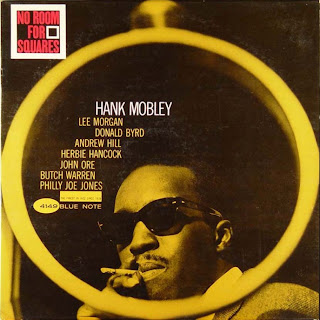
    A couple MUST own Mobley LPs. Notice the line ups, he was tight with Chambers and Jones. My personal fave is Soul Station although most would say Workout is his best. To me, this is smooth jazz, not the nonsense you hear today. There are however some good smooth artists.


  14. #64
    Big science. Hallelujah. noddin0ff's Avatar
    Join Date
    Mar 2004
    Location
    X
    Posts
    2,286
    Quote Originally Posted by poppachubby
    IMO, Mobley's style is very listenable. He is realistically one of the originators of "smooth jazz". When I say smooth jazz, I'm not talking about anti-jazz wanking.
    Heh, heh. Well put! Mobley certainly falls into the 'new to me' category. Thanks to AR, I have a copy of Roll Call that I need to listen to more. I appreciate the suggestions, especially with the art. Squinting at the lineups, Soul Station looks like the safest bet. I'll have to add a few to my Amazon list. I agree with you on the percussion. I was thinking about commenting more on it, but then weighed what I would say against my minuscule knowledge of the percussive arts and figured it would sound pompous. ;-) But then on the other hand, what's a forum for if not to climb on a soapbox for which one is not qualified to occupy? It's a fun project for me. I doubt I'd ever get through the set without this goal. Thanks for the kind words, and for filling in your own thoughts. I appreciate them!

  15. #65
    Big science. Hallelujah. noddin0ff's Avatar
    Join Date
    Mar 2004
    Location
    X
    Posts
    2,286

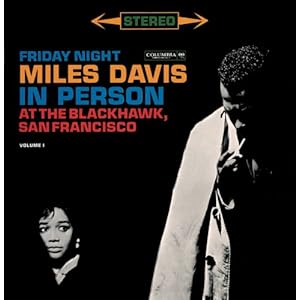
    #14: Friday Night – Miles Davis in person at the Blackhawk, San Francisco (1961)


    Oleo
    No Blues
    Bye Bye (Theme)
    If I Were A Bell*
    Fran Dance
    On Green Dolphin Street
    The Theme*
    All Of You
    Neo*
    I Thought About You*
    Bye Bye Blackbird
    Walkin'
    Love, I've Found You

    Line up

    [i]Miles (trumpet), Hank Mobley (tenor, not on track 5), John Coltrane (tenor, 2nd Tenor on track 1, track 5) , Wynton Kelly (piano), Paul Chambers (double bass), Philly Joe Jones (drums, track 2 only), Jimmy Cobb (drums, all but track 2).

    A series of live albums now coming up. This and the next are subsequent nights in the same venue.

    I listened to Friday Night a bunch of times right after the last post and tried to write something up. I wasn’t really getting into the album. I wrote up this sort of frustrated take on Oleo

    Oleo: As I read here and there, I’m getting an appreciation for what hard bop is and why Miles was getting frustrated with it. I think Oleo more or less exemplifies this, not that it’s a bad track. Miles was frustruated the only way you could break new ground with hard bop was to add more notes and scales. Oleo is packed with them. It’s a Sonny Rollins composition and although I don’t have the Rollin’s version, I can see why it would suit him. Fluid scales and smooth sounds. This version just seems overly busy to me, however.

    And the rest of the album was just falling flat on my ears. So, I took a long break. Sometime during the summer I was out mowin’ the yard (I should’ve thought of the Music for mowin’ thread I had…dang). And I put this album on and, man, was I in a good mood. My thought was, “Now, this is the concert I was hoping to hear when I saw Miles in the 80’s.” (around 1985, I had just gotten into jazz with the classics of Miles, Monk, Mingus, and Coltrane. I had Kind of Blue and ‘Round About Midnight on the mind. Miles played nothing of the sort, and I left a bit confused.)

    So… This is probably what the ‘classic’ Miles concert should sound like. Well executed, somewhat ‘safe’ compared to where Miles is going with the last few albums, but with enough solos and synergies to keep it moving. The line up is close to a dream team.

    The strengths of the album for me are the 10+ minute tracks. I dig when a good theme gets a chance to play out. I’m listening to On Green Dolphin Street as I type and thinking, “Yah, 12 minutes is about right.” You just don’t quite get the sense of freedom on a studio album. I don’t think this take is amazing or anything; just solid and…free. (Well, if it were played by lesser knowns it would be amazing). Even the next track, All of You, which I find kind of boring as a melody, gets a real nice treatment over the course of nearly 16 minutes. Someone can fact check me on this…I was really enjoying the solo around the 8-9 minute mark…I think it was Mobley (looks like I should pay more attention to Mobley, anyway). It just really opened up the melody for me, nothing flashy, and breathed some life into it, still keeping it tender at the heart. That’s the ‘freedom’ I like and what is good about this album. Overall, nothing surprising here.

    This is a 2-disk album. Nearly two hours. That’s a long concert for one night. Several track have been added back to this release (*) that complete the live set. Would’ve been nice to have been there.

    You can read a bit of Mile's comment about this gig and Mobley via Google. This passage is quoted in the booklet that comes with the set. Funny in retrospect that I picked out Mobley to comment on above. Also addresses the


    Next up: Saturday Night --

  16. #66
    Big science. Hallelujah. noddin0ff's Avatar
    Join Date
    Mar 2004
    Location
    X
    Posts
    2,286

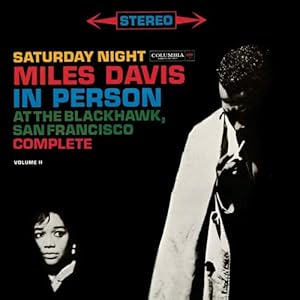
    #15: Saturday Night – Miles Davis in person at the Blackhawk, San Francisco (1961)


    If I Were A Bell
    So What
    No Blues
    On Green Dolphin Street*
    Walkin'*
    'Round Midnight
    Well You Needn't
    The Theme

    Autumn Leaves*
    Neo
    Two Bass Hit*
    Bye Bye (Theme)
    Love, I've Found You*
    I Thought About You*
    Someday My Prince Will Come*
    Softly As In A Morning Sunrise*


    Line up

    Miles (trumpet), Hank Mobley (tenor), John Coltrane, Wynton Kelly (piano), Paul Chambers (bass) Jimmy Cobb (drums).

    Quick note. I messed up the line up for #14 Friday Night. It should be the same as this post for Saturday Night. I forgot to change it over from #13.

    Saturday Night is another 2-CD set. Many tracks not on the original LP.

    Listening? Not surprisingly, Saturday Night is similar to Friday Night. As you might infer, this is the next night’s live show (August 14). On the downside, I noticed that this recording completely misses the bass player throughout, and other members sometimes wander in and out of recording range. Well, not the piano or drums. So, rephrase, Mobley and Miles sometimes wander. On the upside, I thought Mile’s had more fire and sizzle this night. What I think of as his usual total control over his instrument isn’t quite there; his playing is less than perfect, with some blown, and many on the verge of blown, notes. I think the recording benefits from his intensity and willingness to push the limits more than usual. So, although the compositions aren’t so forward leaning, for the total Davis-head fan, this could be a good listen to hear him pushing himself a bit. ‘Course, maybe his lips were just tired... The rest were solid but I didn’t think they were as good as the night before.
    Several Monk compositions on the list. Monk and Coltrane had put out their stellar collaboration a few years earlier (1957); I image the crowd would be looking forward to hearing them. Piano was good throughout. The rest of the band suffered variably from poor recording. Still, it would’ve been a good concert to be at. I’m not really willing to go back and listen to Friday Night in order to make better comparisons. If you qualify by the fact that I listened to the two albums separated by a fair amount of time, I’d say the Friday was the better night.

    Next up: Miles Davis at Carnegie Hall (May 19, 1961)
    Last edited by noddin0ff; 09-20-2010 at 06:54 AM.

  17. #67
    Big science. Hallelujah. noddin0ff's Avatar
    Join Date
    Mar 2004
    Location
    X
    Posts
    2,286

    #16: Miles Davis at Carnegie Hall (May 19, 1961)


    So What
    Spring Is Here
    Teo
    Walkin*
    The Meaning of the Blues / Lament*
    New Rhumba

    Someday My Prince Will Come
    Oleo
    No Blues
    I Thought About You*
    En Aranjuez Con Tu Amor*


    Line up

    Miles (trumpet), Hank Mobley (tenor), John Coltrane, Wynton Kelly (piano), Paul Chambers (bass) Jimmy Cobb (drums); plus a ton of people in the orchestra.

    Hey, 2 reviews in a day! I know you've all been eagerly waiting for more...heh. I've been thinking about giving these albums a scoring system. 1-5 noddins, perhaps. With the counterintuitive 5 noddin's being good. I'm not sure whether to give this 3 or 4 noddins. But, there's your explanation for the (noddins). Take them with a grain of salt. I doubt I can consistently apply them.

    The notes in the booklet were interesting, so I’m retyping them here in full.

    “In order to raise money for the African Research Foundation, Miles appeared at Carnegie Hall, joined by Gil Evans on several pieces including “Spring is Here,” inspired by a Bill Evans arrangement. The atmosphere was tense. Miles, in the wings, confided his stage fright to a bottle of bourbon while Teo Macero prepared to record the concert on the theater’s mono equipment, in secret since the trumpeter had refused the idea. The thrilling introduction to “So What,” arranged by Gil Evans, began the evening on a note of grace. Soon the rhythm section crackled like dry wood, inciting Miles and Hank Mobly to outdo themselves. Miles, who thrived on conflict, would be well served. After intermission, while the concert resumed with “Someday My Prince Will Come,” Max Roach displayed placards on stage denouncing the colonial character of the African Research Foundation. Miles left the stage. Persuaded to return, he showed his anger in the fire and blood he brought to “Oleo” before gradually calming down for the grand finale of “Concierto De Aranjuez”

    Well, despite my established record of Gil Evans bashing, I have to agree that the introduction to “So What” was pretty dang good. Five minutes into my first listen and I am thinking that it is a real shame there wasn’t multi-channel SACD for this concert. I confess to having difficulty enjoying mono-recordings or poor recordings. I mean, what’s the point in listening to great performances if you can’t hear the greatness? However, “So What” is completely enjoyable.

    Next track, “Spring is Here”, took some of my excitement away. Surprisingly, it wasn’t the Gil Evans arrangement that did it. It was the bad miking. Miles just blows away the levels to a nearly painful degree. Of course, one can’t blame the engineers since this was a stealth recording anyway. This is a bit of a problem throughout. Some tracks more so than others.

    Excitement returns with “Teo”. At this point I’m wondering if I’m enjoying the album so much more because the previous two were just not that good, or if this one is actually something special, or if today is just a good day to listen to Jazz. Hard to say with these subjective things. Either way, “Teo” is really doing it for me. It’s all in the whirling rhythm section. I’d appreciate it if someone who knows the technicals of what is going on would explain it to me. I can just barely count well enough to realize that there’s some 3 against 4 going on in the 3/4 time signature. But there’s some sort of propulsive thing going on that I know I like when I hear it and I’ve never been able to figure out what the ‘magic’ is.

    Keep right on blazing into “Walkin”, Mobly on a good run. and even the slip back into the Gil Evan’y The Meaning of the Blues/Lament didn’t bother me too much. Again on the recording quality, I wonder if the reason I’m not shutting my ears to the orchestral Evan’s bits is simply because the quintet is louder relative to the orchestra. I’ll be that a properly produced recording would have balanced the orchestra in better with the result that I’d be complaining about it more. To my ears here, the orchestra is just a nice bit of ornamentation behind the quintet. But, on attempting to listen more, it could be the orchestra is simply more ‘jazzy’ than it was in my previous harangues. They do seem more punchy, in a big band way rather than atmospheric in the orchestra mode. More so in “New Rhumba”

    Set 2 comes back with a short and sweet “Someday…” followed by a sizzling “Oleo.” Miles is great and Mobly equally so.

    As copied in the notes above, Miles potentially had an ax to grind with Max Roach. This puzzles me because nowhere in the liner notes in the booklet or on the reprinted album are there any indications that Max Roach was present. Hmmm. So, I did some Googling and found Max Roach’s obituary (2007) in the The Independent (UK). Link to the article
    http://www.independent.co.uk/news/ob...ch-462049.html

    “Some of Roach's protests about inequality were not universally well received. He was blacklisted by the American recording industry for a period during the Sixties.

    One of the most artistically successful concerts of the time was given by Roach's friend Miles Davis at Carnegie Hall with the Gil Evans orchestra on 19 May 1961. It was a benefit for the African Research Foundation. The author Ian Carr recalled what happened:

    This hugely successful concert was almost spoiled and cut short by a political incident. When Miles was in the middle of "Someday My Prince Will Come", Max Roach, dressed in a white jacket and carrying a placard on which was painted "AFRICA FOR THE AFRICANS! FREEDOM NOW!", walked up and sat down on the stage apron, while Davis and the crowd looked on in amazement.

    A moment later Roach was joined by another demonstrator. Miles waved his trumpet at Roach in dismay and then stopped the music and walked off stage. Security guards carried off Max Roach and his companion, and backstage people talked Miles into going back on, which he eventually did to prolonged applause. The anger Davis felt expressed itself in the even greater intensity of the music.

    When asked later what he thought Roach had been doing, Davis replied, "I don't know . . . Ask him." Carr recounted Roach's explanation:

    Roach said "I was told some things about the Foundation that I thought Miles should know. Some people tried to contact him, but they couldn't get to him. I went onstage because I wanted Miles to be aware of these things."

    Roach was referring to accusations by African nationalists that the Foundation was in league with South African diamond interests who sought to enslave Africans instead of helping them.


    I’m glad I chased down the mystery, it and the whole obit make for a good read.

    “No Blues” has a nice showcase of Paul Chamber’s playing toward the end. Makes up somewhat for the previous albums where he’s inaudible. I always enjoy a bass solo. “I Thought About You” is sweet.

    My patience with Gil Evan’s arrangements wore out on the last piece “En Aranjuez Con Tu Amor”. Too bad the last 17 minutes was consumed by this. It wasn’t horrible. Just not my cup of tea.

    Summary: Even with one listen, I approve of this album. Some great performances, albeit in mono and some poor quality. Nonetheless, excitement crackles throughout. There is a dynamic range of material and some nice takes on just about every piece. Like I said, if only this had been recorded well, this would be a monster of a live album. Of the three so far, (Friday, Saturday and Carnegie) I want to listen to this one again. I had to struggle with myself to cue up the other two.


    Next up: Quiet Nights

  18. #68
    Suspended
    Join Date
    Jan 2003
    Posts
    4,380
    Dogfish Head - Miles Davis *****es Brew
    (Awe Come on it's the freakin title of a Rave Rec!)

    I can't even put a link to the product in here.

    Very tasty brew indeed.
    Last edited by Hyfi; 09-20-2010 at 07:33 AM.

  19. #69
    Big science. Hallelujah. noddin0ff's Avatar
    Join Date
    Mar 2004
    Location
    X
    Posts
    2,286


    I'm a fan of their IPAs. Haven't off-roaded through their selection too much. Liked their Punkin Ale and the Raison D'Etre. I'll have to look for this one. :-)

    clicky the image for the web page.
    Last edited by noddin0ff; 09-20-2010 at 07:53 AM.

  20. #70
    Suspended
    Join Date
    Jan 2003
    Posts
    4,380
    Quote Originally Posted by noddin0ff

    I'm a fan of their IPAs. Haven't off-roaded through their selection too much. Liked their Punkin Ale and the Raison D'Etre. I'll have to look for this one. :-)

    clicky the image for the web page.
    Not sure how ya did it but the link does not work due to the ****

    Anyway, they make lots of interesting brews.

  21. #71
    Big science. Hallelujah. noddin0ff's Avatar
    Join Date
    Mar 2004
    Location
    X
    Posts
    2,286
    Quote Originally Posted by Hyfi
    Not sure how ya did it but the link does not work due to the ****

    Anyway, they make lots of interesting brews.
    hmmm. right you are. Well, changed it to the list of brew page. Can locate by scrolling.

    http://www.dogfish.com/brews-spirits...rews/index.htm

  22. #72
    Big science. Hallelujah. noddin0ff's Avatar
    Join Date
    Mar 2004
    Location
    X
    Posts
    2,286

    #17: Quiet Nights (1962)


    Song No.2
    Once Upon A Summertime
    Aos Pez Da Cruz
    Song No.1
    Wait Till You See Her
    Corcovado
    Summer Night
    The Time Of The Barracudas*
    Blue Xmas (To Whom It May Concern)*
    Devil May Care*

    Line up

    Miles (trumpet) and a bunch of people

    Another trek back into Gil Evans land. This time Gil relocated to South America. Skimming highlights from the booklet, note that in 1962 Stan Getz opened up the bossa nova sound with Desafinado and thus, “the time was ripe to take advantage of Gil Evan’s pre-existing interest in South America.” I get the impression from the notes that this album was somewhat of a partial effort at an album that spanned several disparate sessions and came together due to Teo Macero’s editing. This release has 3 additional tracks recorded during the same period. One for a Christmas album (guess which) that never came to be. One of my favorite Christmas songs, actually. Minus the bonus tracks the album only runs about 26 minutes.

    The album, despite my general distaste for Gil’s arrangements, doesn’t suck like I expected it to. There are even several tracks that I enjoy. I am a sucker for the bossa sway and I think the attempt at capturing the gentleness does much to dampen down the abrasiveness of Gil. Also, as compared to SkofSp, Miles sounds more unconstrained. I think the songs also play more to Miles gifts in the softer and muted ranges. If you like Gil Evans then you’ll probably not like the careless editing. If you are fine with sporadic snippets of good stuff sprinkled about. Then you’ll be fine with this album. However, this is far far from a great album. A curio for the completist maybe.

    Track 1: Song No 2 – It’s still a Gil Evans orchestral introduction, but it’s not jarring, brash or awful. Doesn’t do much for me, but at 1:40 at least its over and done with quickly.

    Track 2: Once Upon a Summertime – Again not quite my cup of tea, but I will highlight some wonderfully mournful playing by Miles. The guy can play the trumpet. I kind of wish the whole track was simply a solo. I think hearing dead air between Mile’s phrases would speak more to the intent of the arrangement than cluttering it with orchestral noodling. Completely ruining what ever spell this track hopes to cast is the abrupt splice at 1:58. I mean, “Come on! Did someone fall asleep in the engineering booth?”. What was Teo thinking… also a splice at 0:51…There is some nice guitar fill in if you take the time to listen for it.

    Track 3: Aos Pez Da Cruz is a pleasant little ditty. Not much going on but easy on the ears, Gil’s chords not withstanding.

    Track 4: Song No. 1 – Why Gil, why? Song saved by percussion and Miles leading. The track nearly becomes a worthy thing about a minute before it ends, then shrinks.

    Track 5: Wait Till You See Her – Bossa with pensive noodling.

    Track 6: Corvcovado – I’m too influenced by the Getz/Gilberto (every one should have this album) to even start to like this over complicated Gil version. Miles and the percussion seem to get it. They put a little more propulsive emphasis on it that Getz/Gilberto which is interesting.

    Track 6: Summer Night – Interestingly this was a filler track by the quartet of Miles, Victor Feldman (p), Ron Carter (b), and Frank Butler (d). Recorded earlier that year with not Gil. And yes, it’s nice. Out of place in this album, sure; it’s not particularly bossa or latin sounding. It does sooth some of the wounds that the previous tracks may have imparted.

    Track 7: Time of the Barracuda – Suddenly the album gets interesting here. Within the first 30 seconds your already expecting something much better than anything prior on the album. Tony Williams (d) is amazing in general and really pulls this piece together. His hands are everywhere, complementing everyone else. Ron Carter (b) gives it a foundation. Miles and Herbie Hancock push the edges. Apparently still a Gil Evans arrangement according to the credits. Around the 5:20 mark there an abrupt-ish halt and a redirect in the arrangement. Can’t say I enjoyed it. Then another shift ~7:00 to something more bluesy and almost comical. I did kind of enjoy this. You can hear some talking in the background, I assume people were kind of just vamping around.

    Track 8: Blue Xmas – Fan of this one. Bob Dorough (p, voc.), Wayne Shorter (ts), Paul Chambers (b), Jimmy Cobb (d), Frank Rehak (tb), Willie Bobo (bongo).

    Track 9: Devil May Care – another out of place track. A bit hard to appreciate in this context. Not a bad track though. It’s got bongos.


    Next up: Seven Steps to Heaven

  23. #73
    Big science. Hallelujah. noddin0ff's Avatar
    Join Date
    Mar 2004
    Location
    X
    Posts
    2,286

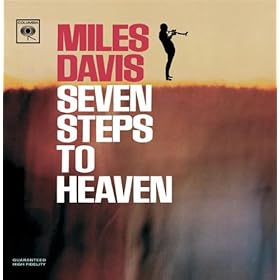
    #18: Seven Steps to Heaven (1963)


    Basin Street Blues
    Seven Steps To Heaven
    I Fall In Love Too Easily
    So Near, So Far
    Baby Won't You Please Come Home
    Joshua
    So Near, So Far*
    Summer Night*

    Line up:

    Line up 1: Tracks 1, 3, 5, 7, 8 : Miles (trumpet), George Colman (7 only, tenor), Victor Feldman (piano), Ron Carter (bass), Frank Butler (drums).

    Line up 2: Tracks 2, 4, 6: Miles (trumpet), George Colman (tenor), Herbie Hancock (piano), Ron Carter (bass), Tony Williams (drums).


    I like the opening of the first track, Basin Street Blues, it pokes coyly at the swinging riff of this classic. Then wanders off about a minute in. That about sums up my take on the whole album. I liked it, but my mind wandered away while listening. It’s a well played, lovely bit of work throughout, but nothing really grabbed my attention. Dare I say it just had no character, no defining quality that stood out in my mind? I feel bad trying to get back to my Miles project with nothing to say. I actually had listened to this album many times just after I finished my last review. Then, as now, I there wasn’t much I felt like saying about this one.

    The liner notes point out that there are basically two different line ups on this album. I listed them above. I even went so far as to listen to the tracks sorted by line up to see if it was the comingling in the context of the album that maybe kept me from getting into a listening groove. Partially, it was. I was very surprised that neither line up really carried the day. I especially thought that hands at the keyboard would sway me… That’s not quite right… I really thought drums would sway me as I almost always find that, when I pay attention, Tony Williams is behind tracks that really come together. I’m rather ignorant about percussion in general, but I’m always amazed that I can often identify Tony Williams. But keyboards should’ve been a discriminator as well. Someone more cerebral about jazz would likely instantly know who was playing each track. Blindfolded and deprived of foreknowledge, I don't know that I could tell for most tracks on this album.

    In the end, there were style differences. If you separate tracks out by line up you have two different albums (except for the bonus track). Line up #1 has heart and emotion. Line up #2 has motion and progression. But neither added up to a slam dunk of one line up over the other. The reviews I read all say this album represents transitions in Miles’ directions and line ups. I don’t think that explains this album. It certainly occurs at a transition time, but I don’t think any of the tracks really sound transitional. The exception is the bonus track #7, So Near, So Far, is where line up #1 plays more like line up #2. Maybe this marks where Miles wanted to go a direction and found line up #1 lacking. Overall though, you’ve got tracks on either side of a transition alternating on an album. To me that’s just muddle; it left me with a unsatisfied listening experience. Every individual track is good. The album is not so hot. For anyone who is reading, I switched to flac for posts.

    I took notice on the track Joshua. Real promising opening, strong and propulsive. My thought was that Coltrane would've really killed on this. Once I thought that, then I got disappointed that it wasn't Coltrane and couldn't give it a fair listen.

    Next up: In Europe (Live at theAntibes Jazz Festival)
    TCA ATT GGA

  24. #74
    Forum Regular nobody's Avatar
    Join Date
    Nov 2003
    Posts
    1,964
    I just wanna say thanks for doing this. Damn, that's a lot of Miles to listen to. I'm definitely a fan, but his body or work is so vast I know I have only scratched the surface. These comments give me a great resource for picking out things for further exploration.

  25. #75
    Vinyl Fundamentalist Forums Moderator poppachubby's Avatar
    Join Date
    Aug 2009
    Location
    Analog Synagogue
    Posts
    4,363
    Alot of Miles output was indeed blahzay and geared to make money by exploiting his fame.

    Here's one I have been enjoying over the last few months. I bought this set for only $100!! An excellent price for an out of print, limited set of possibly the best live jazz performance ever recorded.


Page 3 of 4 FirstFirst 1 2 3 4 LastLast

Thread Information

Users Browsing this Thread

There are currently 1 users browsing this thread. (0 members and 1 guests)

Posting Permissions

  • You may not post new threads
  • You may not post replies
  • You may not post attachments
  • You may not edit your posts
  •